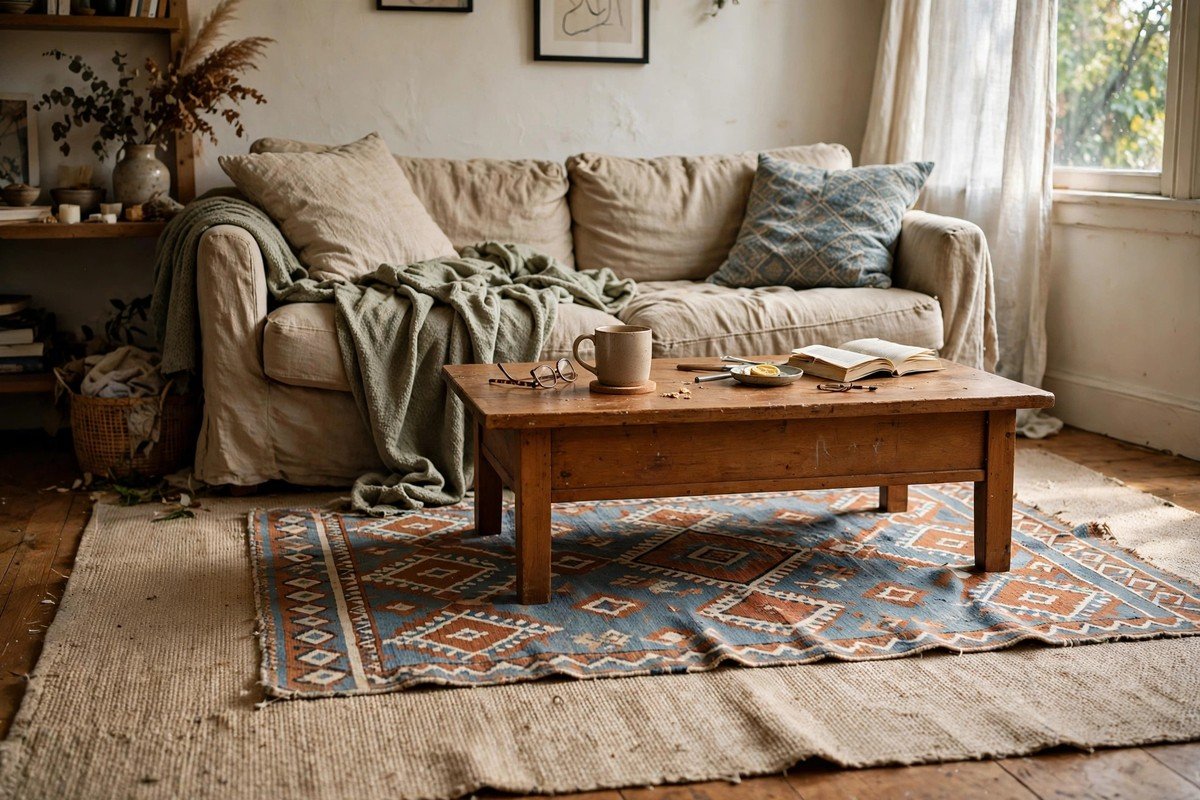
For a long time, my living room felt almost done but not quite. The sofa was in place, the coffee table was set, and still something felt missing. Then I layered a second rug over the first one, and the whole room finally felt settled and warm.
1. Start With the Big Rug
Every layered look starts with one large base rug. I pick a simple one in a neutral color, like a flat weave or a low pile rug, because it covers a good amount of floor and sets the shape of the seating area. The base rug should reach under the front of the sofa and stretch out toward the coffee table. I learned this the hard way after buying a rug that was too small and watching it float in the middle of the floor.
2. Layer a Smaller Rug on Top
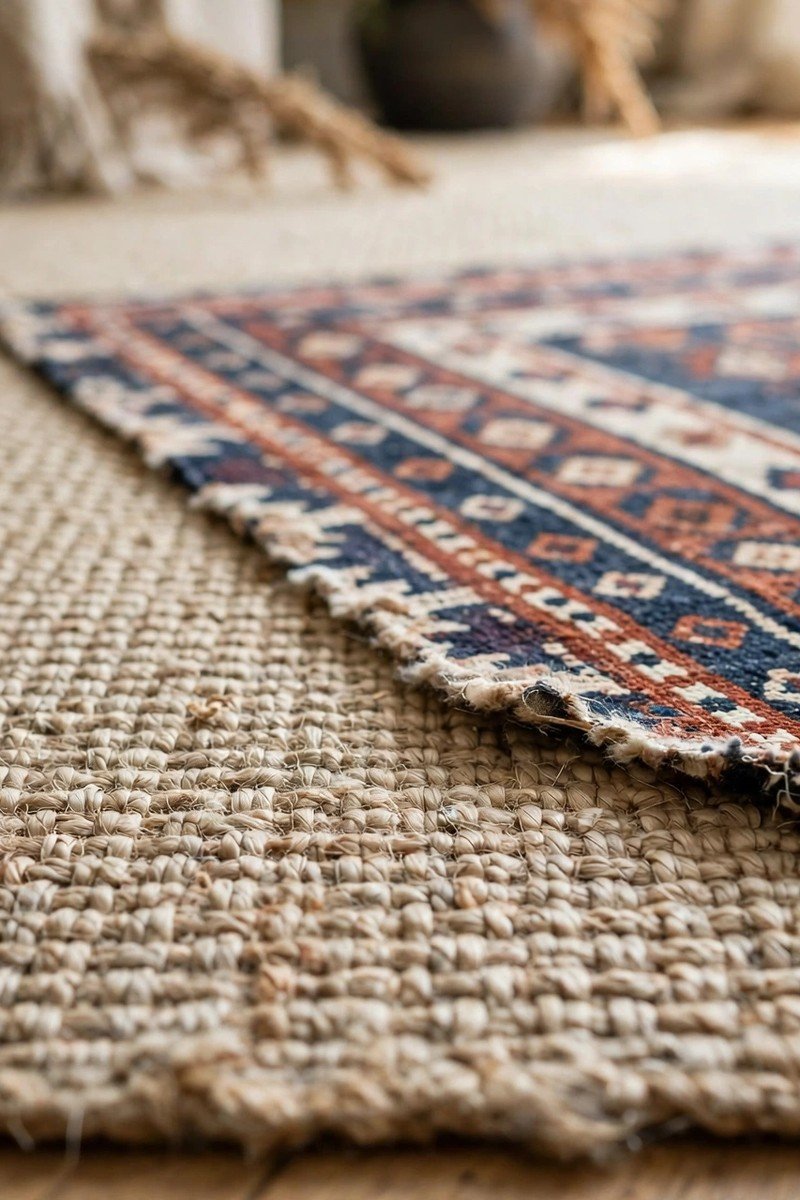
Once the base rug is down, I add a smaller rug on top of it, usually near the coffee table or slightly off center. This top rug can carry the pattern or the texture that the base rug does not have. The top rug should be clearly smaller than the base rug so both layers show, and I leave a border of the base rug visible all around. That border is what makes the layering look planned instead of accidental.
3. Keep the Front Legs on the Rug
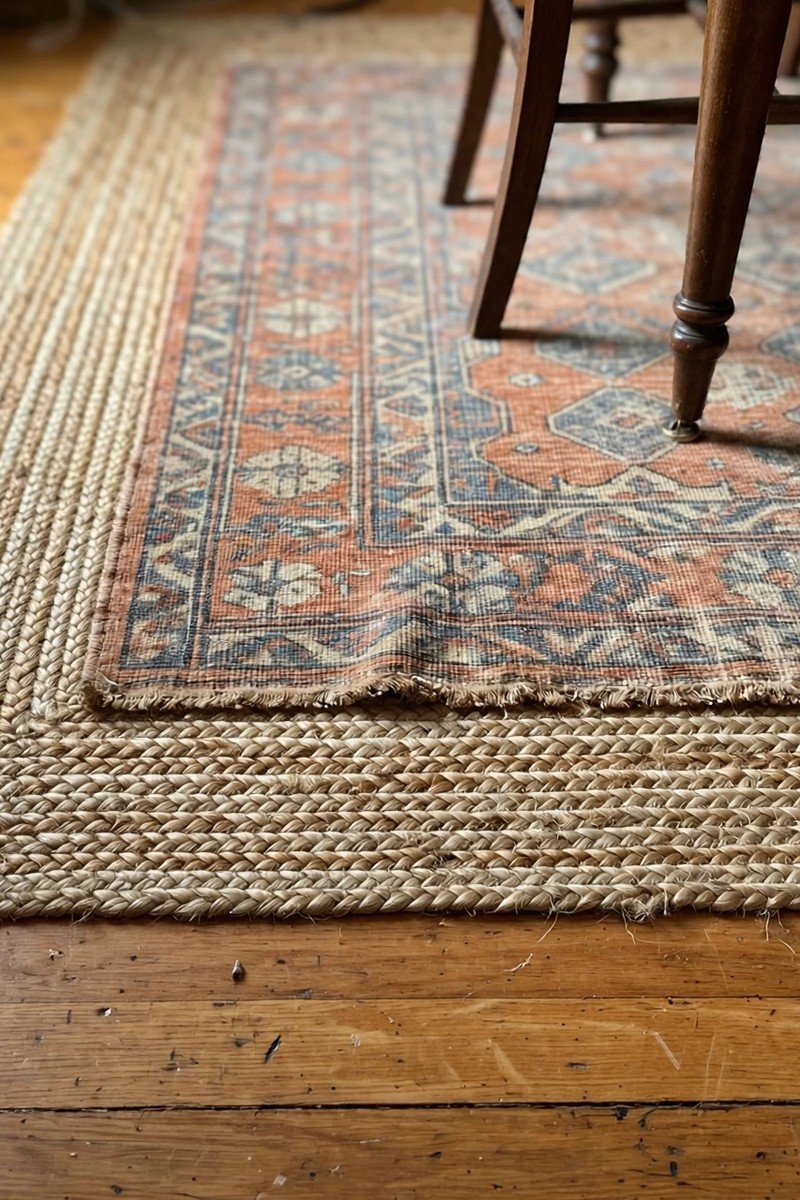
One rule I always follow now is keeping the front legs of the sofa and chairs on the rug. When the furniture sits fully off the rug, the pieces look like they belong to different rooms. When the front legs rest on the rug, the seating area feels like one group. If a chair leg keeps slipping off, I shift the rug a few inches until the legs land where they should.
4. Mix Texture, Not Clashing Patterns
Layering works best when the two rugs feel different to touch but calm together. I pair a flat base rug with a thicker top rug, or a smooth weave with a soft shag. What I avoid is two loud patterns fighting each other, because that makes the floor look busy. If the top rug has a clear pattern, I keep the base rug plain, and if the base rug has texture of its own, I pick a top rug in a solid color.
5. Try a Round Rug Under a Round Table
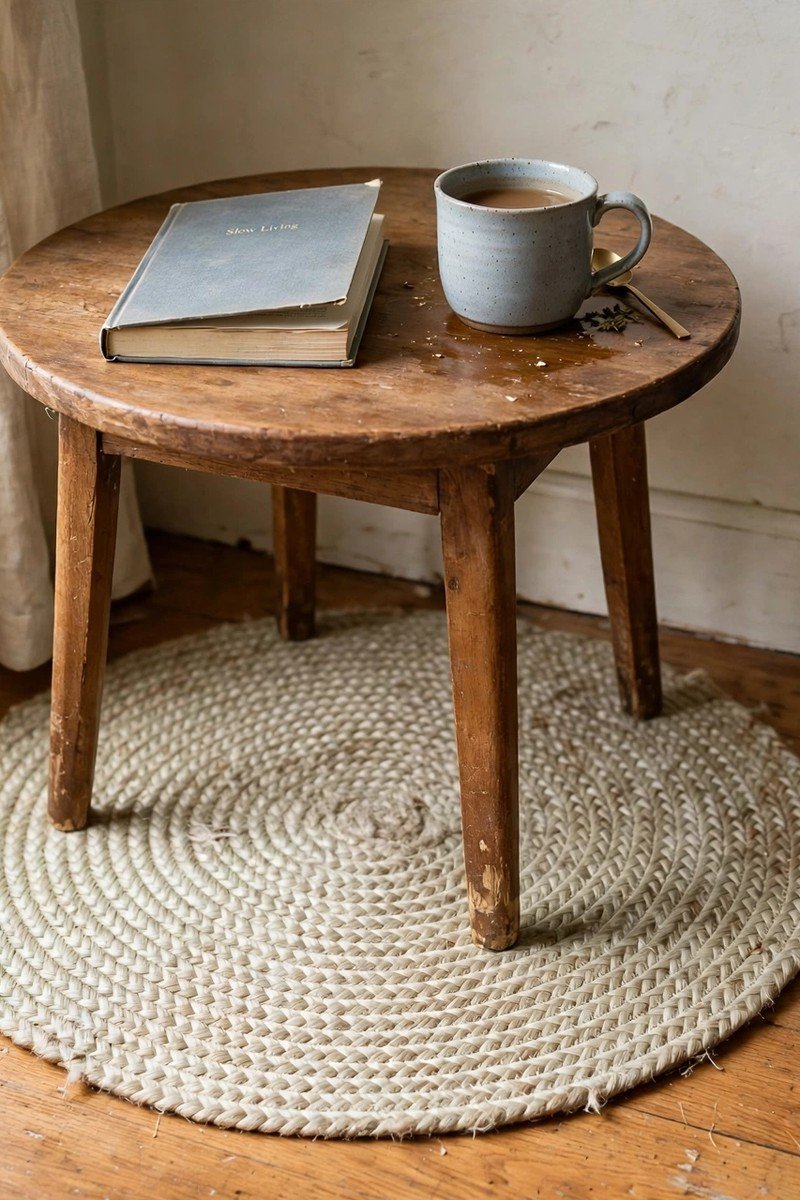
A round rug under a round side table or a round coffee table is one of my favorite small moves. The matching shapes feel natural, and the curve softens a room full of straight lines. I use this in a reading corner or beside the sofa, where a small round rug marks the spot without taking over the floor. The rug only needs to be wide enough for the table legs and a little extra room around them.
6. Layer Over Hard Floors
Hard floors are the best base for rug layering, because the wood or tile already gives a warm frame around the rugs. I place the large rug first so it protects the floor under the seating area, then layer the smaller rug where feet land most. I also like how the edge of the base rug shows a strip of floor around it, because that strip keeps the room from feeling covered up.
7. Use a Rug Pad So Nothing Slides
A rug pad is the unglamorous part of layering, but I never skip it now. The pad goes under the base rug and keeps it from sliding when someone walks across it or pushes a chair back. For the top rug, I use a thin grip pad if it tends to bunch up at the corners. I cut the pad slightly smaller than the rug so it stays hidden, and once the pads are in place, I stop fixing the rugs every single day.
8. Let the Rug Set the Color Story
When I am unsure about throw pillows or curtains, I let the rugs decide the colors first. I pick one or two colors from the top rug and repeat them in small touches around the room, like a cushion or a throw blanket. If the rug has a warm rust tone, I might add a cushion in a similar shade and leave the rest neutral. This approach saves me from second guessing every small decor choice.
9. Layer in a Small Reading Spot
A reading spot does not need a full furniture set to feel special. I place a small rug beside a chair, add a floor lamp, and put a basket for books nearby. A second, even smaller rug layered on top can mark the spot as its own little zone inside the bigger room. It has become my favorite place to sit with tea in the morning, and a small layered rug is all it takes to turn an empty corner into a place people want to use.
10. Care and Vacuuming Basics
Layered rugs need a little regular care to keep looking good. I vacuum the top rug first, then lift it and vacuum the base rug underneath, because dust settles between the layers. I shake out the smaller rug outside when I can, and I spot clean spills right away with a damp cloth before they set. I also rotate the top rug now and then so one side does not wear faster than the other.
Conclusion
Rug layering changed my living room more than any single piece of furniture did. It added warmth, tied the seating area together, and made the room feel complete. Start with one large base rug, add a smaller one on top, and adjust until the room feels like yours.