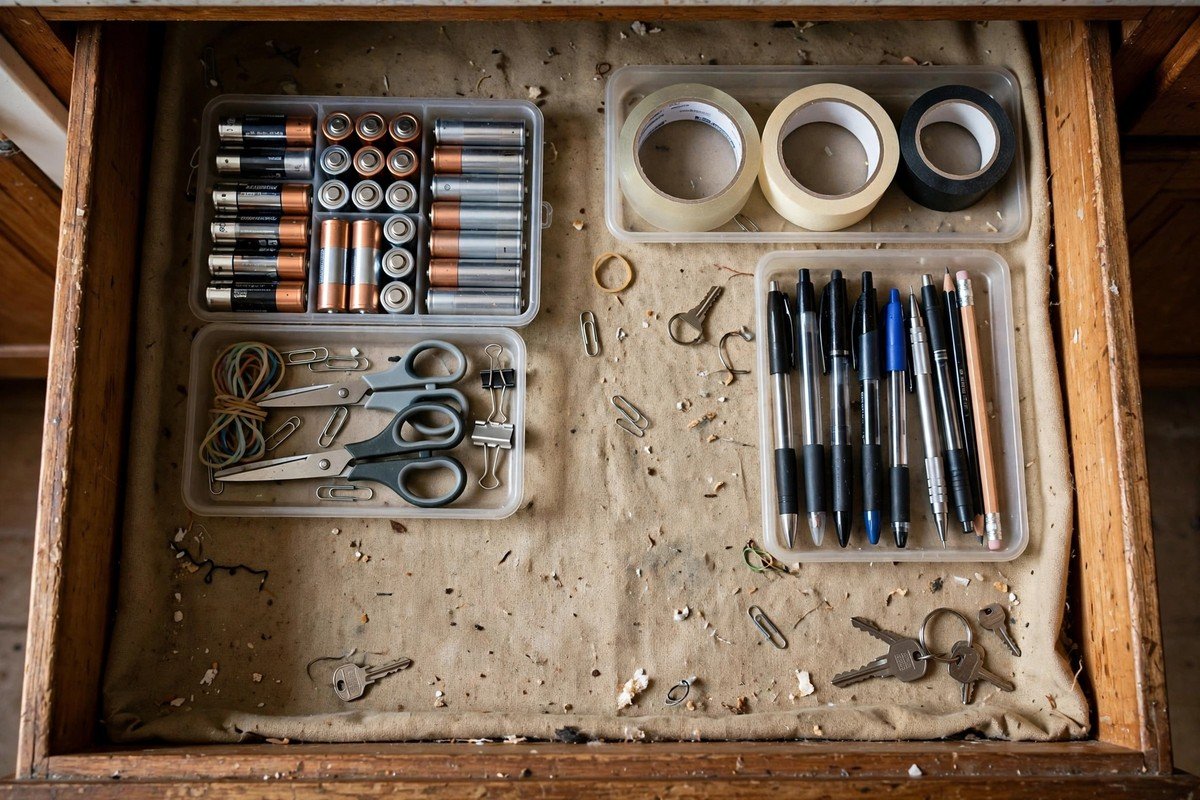
Every home has one drawer that collects everything. Mine held batteries, rubber bands, spare keys, tape, pens that did not work, and a charger I could not identify. Every time I opened it, something snagged. I finally emptied the whole drawer onto the table, and I was surprised by how little in there I actually used. Organizing that one drawer took less than an hour, and it has stayed tidy ever since. These ideas made the difference.
1. Empty the Drawer Completely First
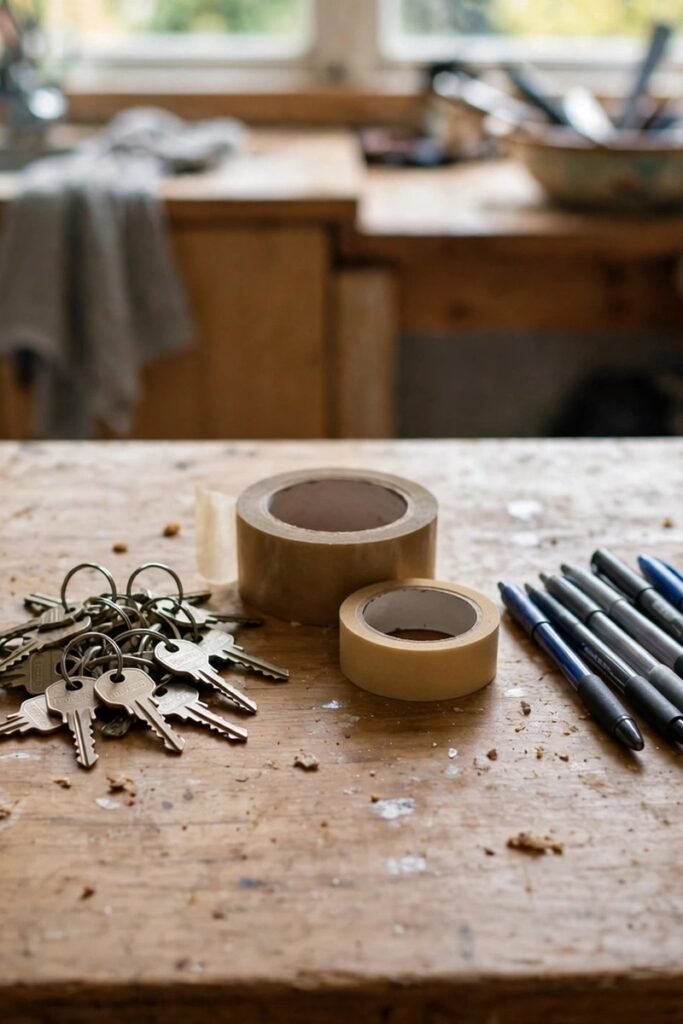
Do not try to organize around the mess. Take everything out and wipe the drawer clean. I laid it all on the kitchen table and sorted it into piles: keep, move elsewhere, throw away, and recycle. Seeing everything at once makes the decisions easy. Only put back what you truly use in that room. Everything else needs a better home, not a tidier drawer.
2. Use Small Trays Inside the Drawer
Small trays stop things from sliding into one mixed pile. I use three shallow trays in my drawer: one for batteries, one for tape and scissors, and one for pens and pencils. The trays keep each group in its own space, even when the drawer is opened and closed many times a day. The point is to give every group a border. Without borders, a drawer will always drift back into a jumble.
3. Keep Only One of Each Tool
A junk drawer grows because of duplicates. I found four pairs of scissors, six pens, and three rolls of tape in mine. I kept the best one of each and moved the rest to other rooms or gave them away. One good pair of scissors, one roll of tape, and two working pens are enough for most homes.
4. Give Batteries Their Own Small Box
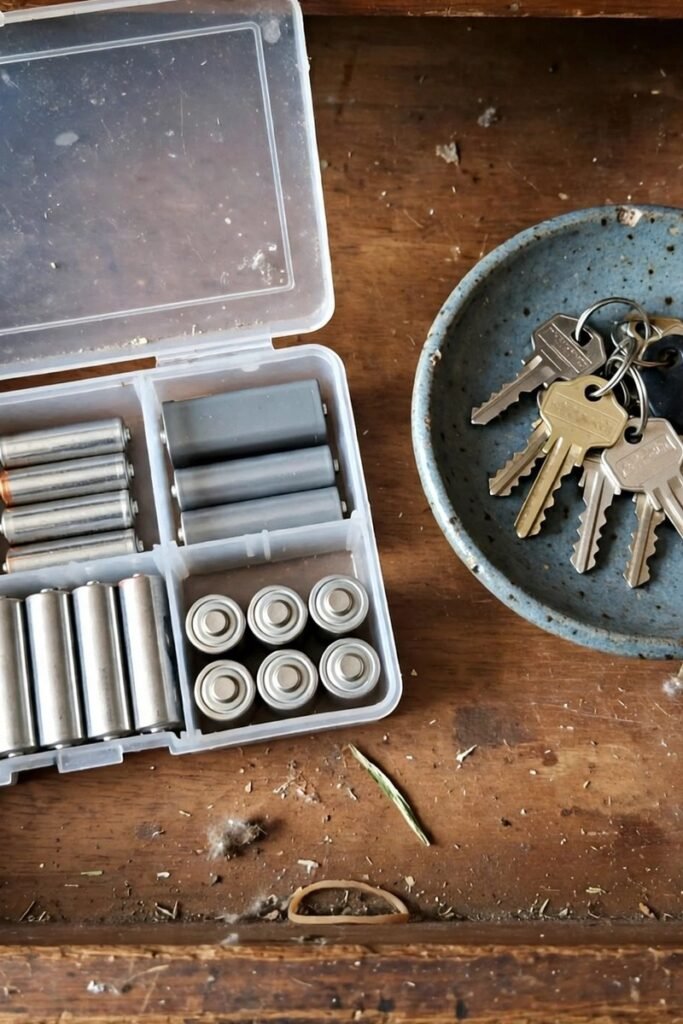
Batteries roll everywhere if they have no home. I keep mine in a small lidded box inside the drawer, sorted by size, with new batteries on one side and used ones waiting for recycling on the other. The lid stops them from rolling out when the drawer moves. I also keep a small tester in the box, so I can check a battery before I throw it away. This one small box ended the rattle I used to hear every time I opened the drawer. It also keeps batteries away from metal items like keys.
5. Add a Small Dish for Keys and Coins
A small dish inside the drawer gives keys and coins a landing spot. I use a shallow ceramic dish that fits in one corner of the drawer. Spare keys go in the dish, and coins go in too until I move them to a jar. Without the dish, keys scratch other items and coins slip into corners. Label the spare keys with small tags so you know which lock each one opens. A dish is a tiny habit, but it keeps the drawer from becoming a treasure hunt.
6. Store Chargers in a Pouch, Not Loose
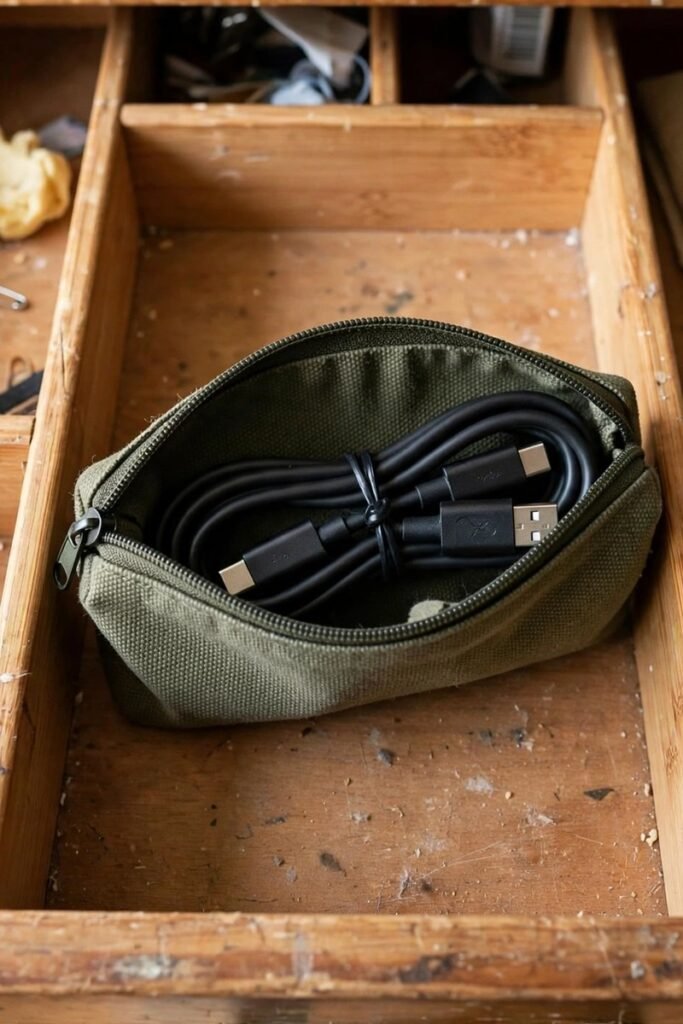
Loose chargers tangle with everything. I keep my spare charger in a small zip pouch inside the drawer, coiled neatly with a twist tie. The pouch keeps the cord from wrapping around scissors and pens. I label the pouch with the device it belongs to, because chargers all look alike. One pouch per charger is enough, and I keep only the charger I actually use in the drawer. Untangling a drawer should not be a daily job.
7. Keep a Short List of What Belongs in the Drawer
I taped a small list inside the drawer: batteries, tape, scissors, pens, keys, charger, stamps. If an item is not on the list, it does not go in the drawer. The list sounds strict, but it stops the drawer from becoming a home for random objects. When something new arrives, I ask if it belongs on the list or in another room. Most things belong elsewhere. The list also helps other people in the house put things back in the right place. A drawer stays tidy when everyone knows the rule.
8. Do a Two Minute Tidy Once a Week
A junk drawer stays tidy with a tiny weekly habit. Every Sunday, I open the drawer, take out anything that drifted in during the week, and put trays back in place. It takes two minutes, and it stops small messes from becoming big ones. I do it while I wait for the kettle to boil, so it never feels like a chore. If I skip a week, the drawer still looks fine, because the trays hold the shape. Regular tiny tidies beat one big clear out every year.
9. Use Drawer Dividers That Fit Snugly
Dividers that slide around are almost as bad as no dividers. I measured my drawer before buying dividers, and I chose ones that fit snugly from side to side. A snug divider stays put when you open and close the drawer fast. Adjustable dividers work well if your drawer is an odd size. Press them firmly into place and test the drawer a few times before you fill it.
10. Leave One Empty Space on Purpose
Leave one small empty space in the drawer. I keep one corner empty, and it acts as a buffer for the odd item that lands in the drawer during a busy week. When the empty space fills up, I know it is time for my weekly tidy. Without an empty space, every new item pushes the others out of place. It is breathing room that keeps the whole drawer working.
Conclusion
A junk drawer does not need fancy products to stay tidy. It needs fewer items, clear groups, and a weekly two minute check. Empty it once, give everything a border, and keep only what you use. That one drawer will stop being a mess and start being useful.