My kitchen counter used to be a pile of fruit and vegetables with nowhere to go. Onions rolled into the corner, bananas sat next to the sink, and the tomatoes disappeared behind the kettle. I tried a few storage ideas, and the counter finally looks clear most days. Here are ten that work in a real kitchen.
1. Use a Two-Tier Fruit Basket on the Counter
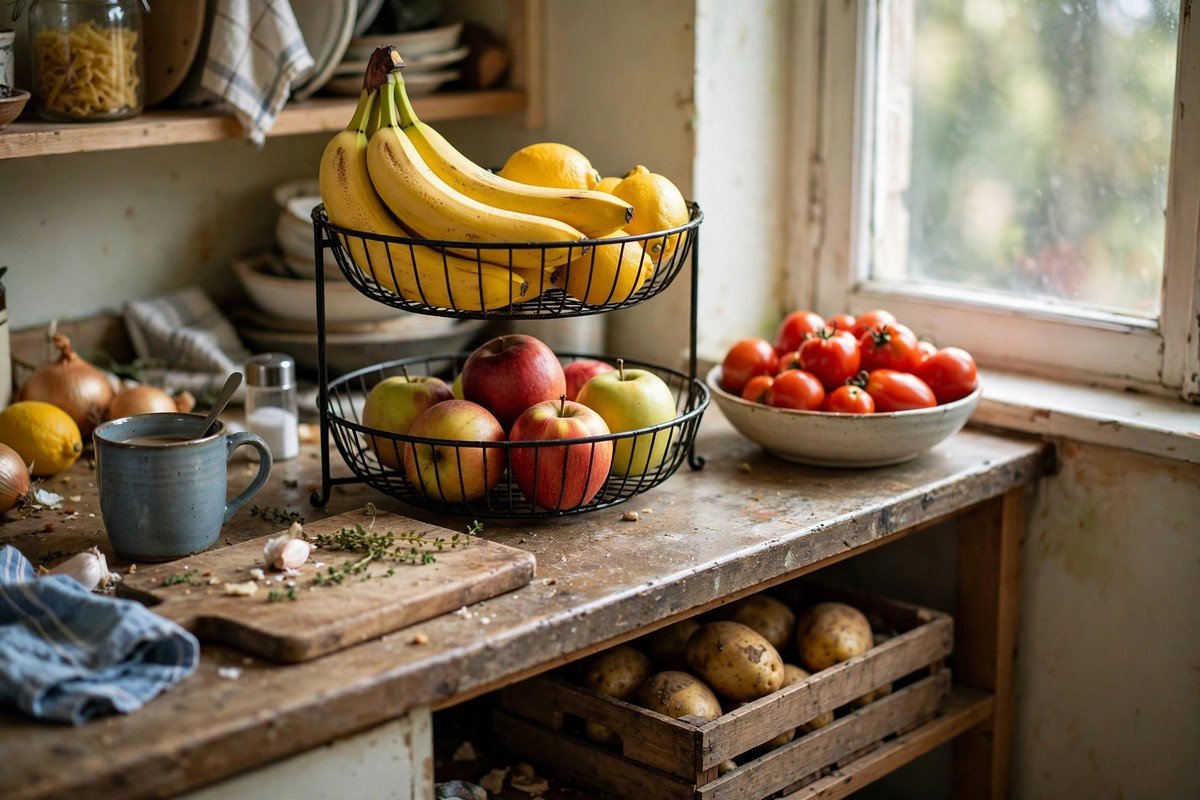
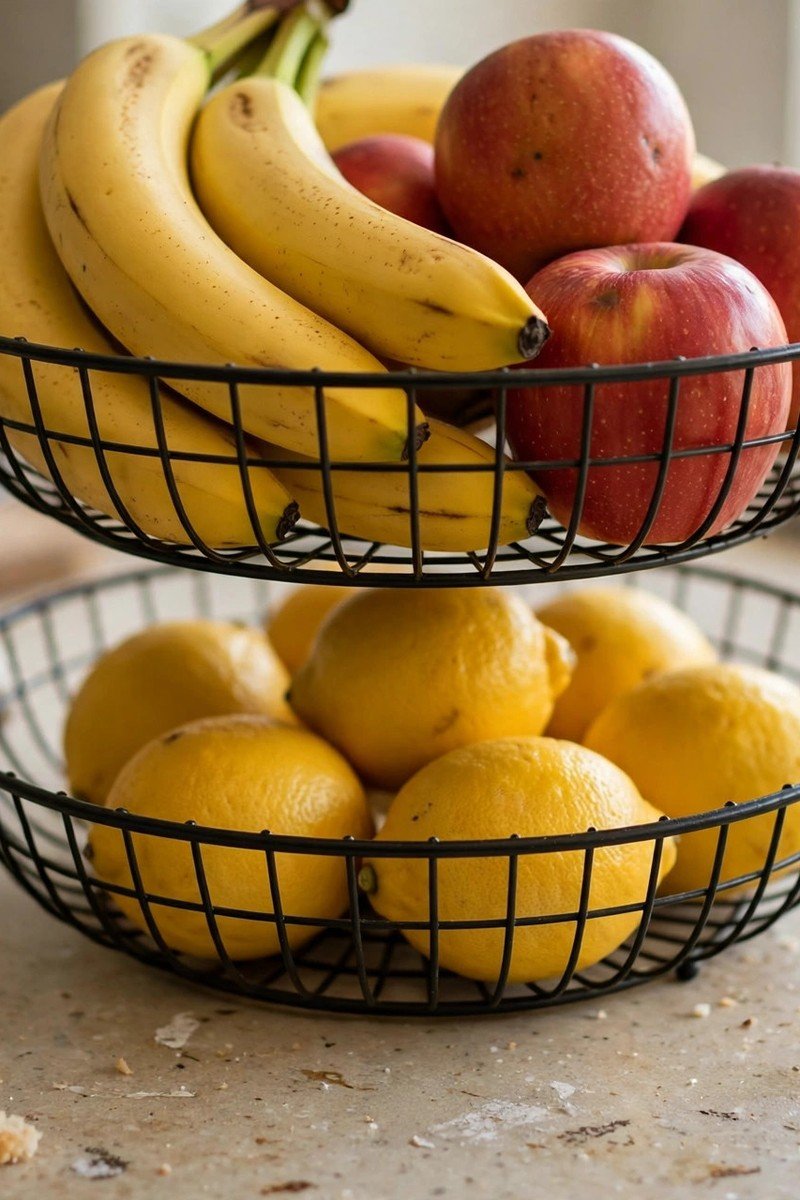
A two-tier basket holds a lot without taking up much counter space. I keep bananas and apples on the top tier and lemons and limes below. The open wire or slats let air move around the fruit, which keeps it fresh longer. I put the basket in a corner near the stove so it is easy to reach while I cook.
2. Hang Onions and Garlic in a Mesh Bag
Onions and garlic last longer when air can reach them, and they stay out of the way in a mesh bag. I hang a small bag on a hook inside the pantry door or on the side of a cabinet. It keeps them dark and dry, which is what they need. I keep potatoes in a separate bag so the onions do not make them sprout early. A bag with a drawstring top makes it easy to grab one onion without spilling the rest.
3. Keep a Wooden Crate for Potatoes
Potatoes like a cool, dark spot, and a small wooden crate gives them exactly that. I keep a crate on the bottom shelf of the pantry with a folded tea towel over the top to block the light. The slats in the crate let air flow, and the potatoes stay firm for weeks. I check the crate every few days and take out any potato that feels soft.
4. Store Herbs in a Jar of Water in the Fridge
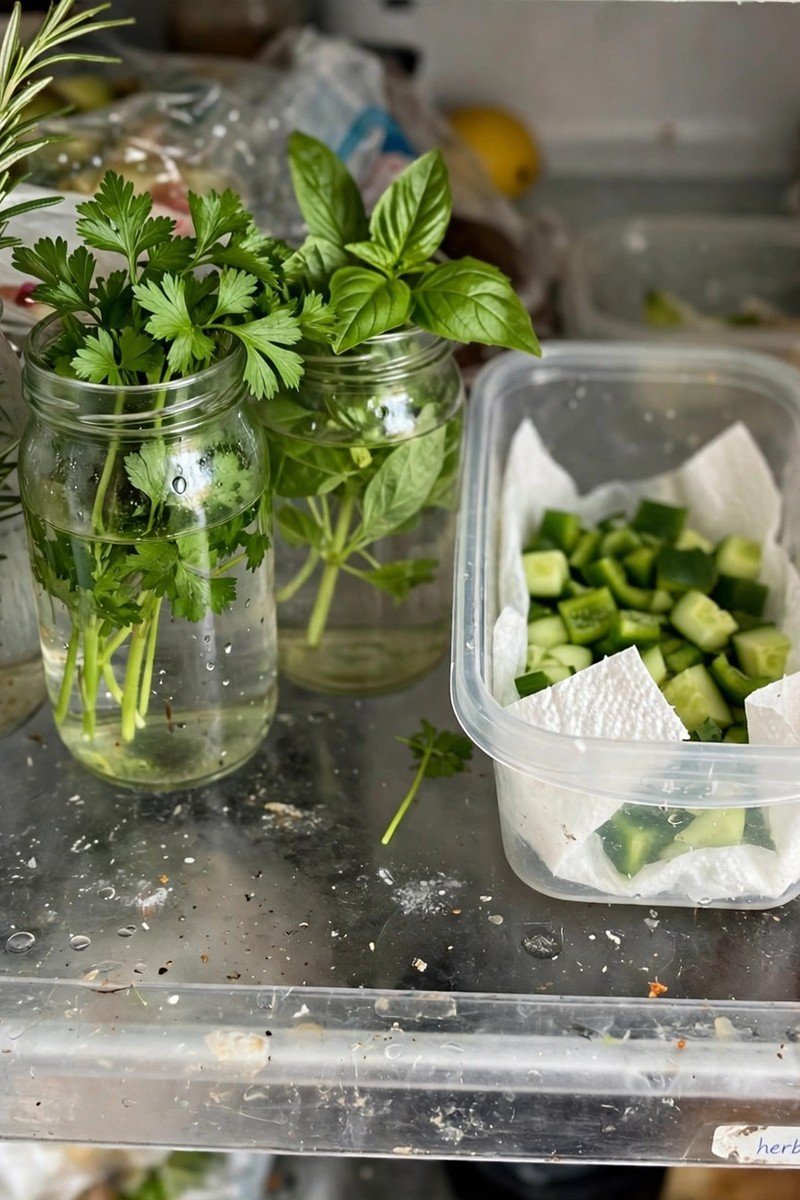
Fresh herbs used to wilt in my fridge within two days. Now I treat them like flowers. I trim the stems, stand them in a jar with a little water, and slip a loose bag over the top. The jar sits on a fridge shelf, and the herbs stay fresh for more than a week. I use this for coriander, parsley, and mint.
5. Use Clear Containers for Cut Vegetables
Once I cut vegetables, I store them in clear containers with lids. I can see exactly what is inside without opening every box. I add a folded paper towel to the bottom of the container for chopped peppers or cucumbers, because it soaks up extra moisture and keeps them crisp. I stack the containers on one fridge shelf so they are easy to find. I write the day I cut them on a small piece of tape on the lid, so I know what to use first.
6. Give Tomatoes a Shallow Bowl by the Window
Tomatoes lose flavor in the fridge, so I keep them on the counter in a shallow bowl. A wide, low bowl works better than a deep one, because the tomatoes sit in a single layer and none of them get crushed. I put the bowl near the window where it gets light but not hot sun. I keep them stem side down, which helps them stay fresh a little longer. I buy only what I will use in a few days, because ripe tomatoes go soft fast.
7. Add a Pull-Out Basket Inside a Cabinet
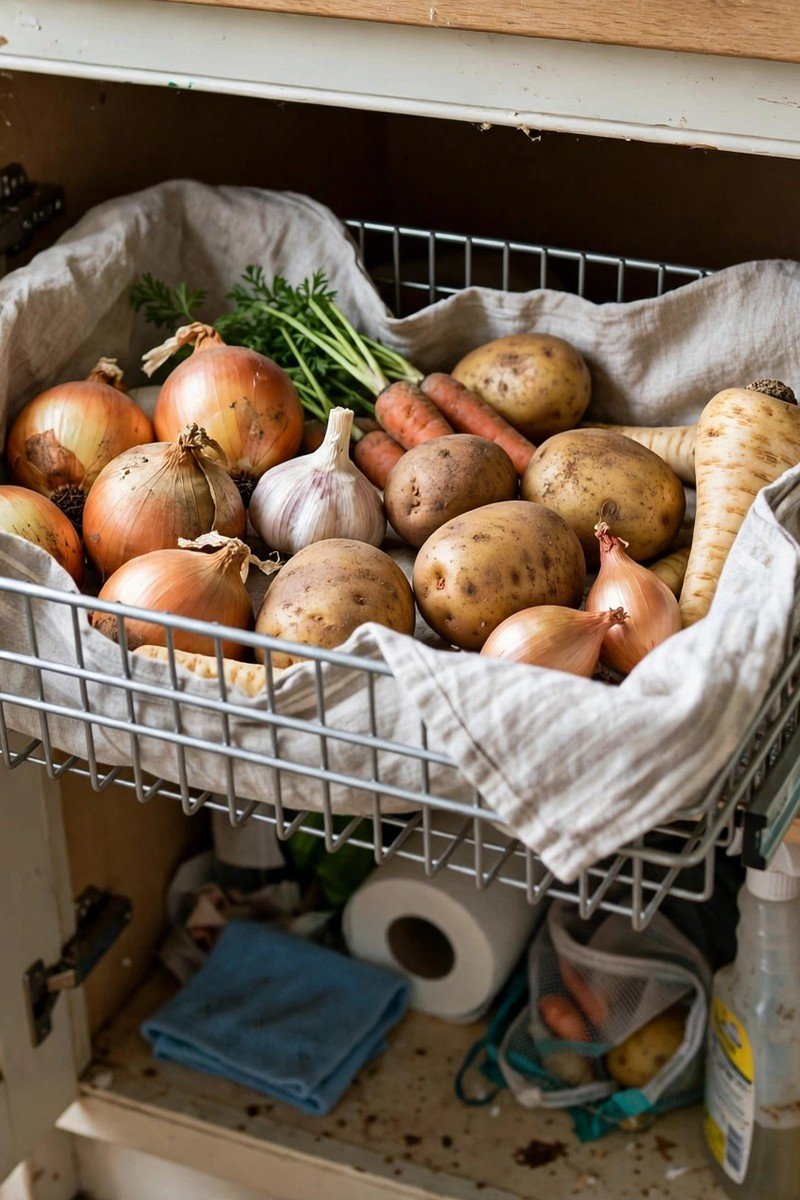
A pull-out basket inside a lower cabinet is the best hidden storage I have added. I keep root vegetables and onions in one basket, and the basket slides out so I can see everything at once. Nothing gets lost at the back of the cabinet anymore. I line the basket with a piece of cloth so small onions do not roll through the gaps. The basket works for fruit that does not need the fridge too, like avocados that are still firm.
8. Use the Fridge Door for Small Items
The fridge door is the warmest part of the fridge, so I do not put milk there. I use it for small things that need to stay cool but not cold, like ginger, chillies, and spring onions. A small jar or a zip bag keeps them together in one door shelf. I keep chillies in a bag so they do not dry out, and I wrap ginger in a dry cloth. Everything stays visible, so I actually use it before it goes bad.
9. Line a Drawer With a Cloth for Loose Produce
A kitchen drawer can hold loose produce if I line it first. I put a clean tea towel in the bottom of a drawer, then lay out garlic, ginger, and small onions in a single layer. The cloth stops things from rolling around when the drawer opens and closes. It also catches any dirt from the skins, and I shake it out once a week. I keep this drawer near the stove, so I can grab what I need while I cook.
10. Keep a Small Bowl for Fruit That Needs Using First
Some fruit ripens faster than the rest, and it gets forgotten at the back of the basket. I keep a small bowl on the counter for anything that needs using today or tomorrow. A soft banana, a ripe avocado, or a peach that is ready goes in the bowl. I see it every time I walk past, so it gets eaten or cooked instead of wasted. When the bowl is empty, I fill it from the main basket.
Conclusion
A tidy counter is not about having less food in the kitchen. It is about giving every fruit and vegetable a place that keeps it fresh and easy to reach. A basket, a crate, and a few jars are all it takes, and the kitchen feels calmer every time I walk in.