I used to open my kitchen drawers and feel stuck before I even started cooking. I would dig for a spatula, find tools I never use, and lose track of what I was making. A few small changes made my drawers work better, and now cooking feels calmer from start to finish.
1. Sort by Task, Not by Type
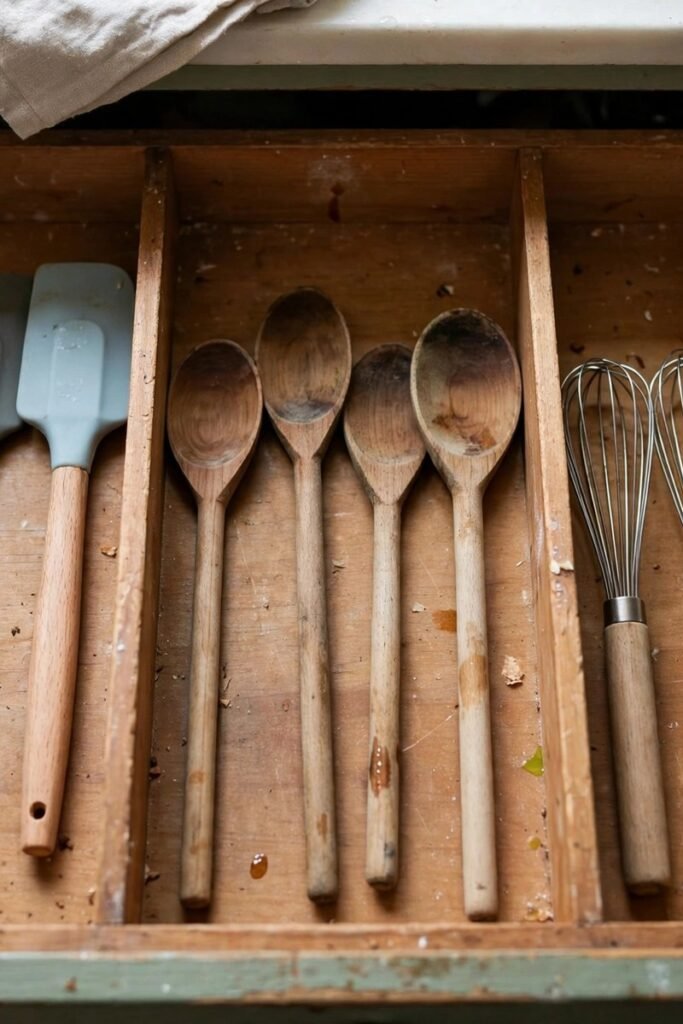
I stopped grouping tools by what they were and started grouping them by what I do with them. My morning drawer holds the coffee scoop, the tea strainer, and the small spoons I reach for first. My cooking drawer holds the spatulas, tongs, and wooden spoons I use at the stove. When I sort by task, I open one drawer and find what I need for that moment.
2. Choose Dividers That Fit Your Drawers
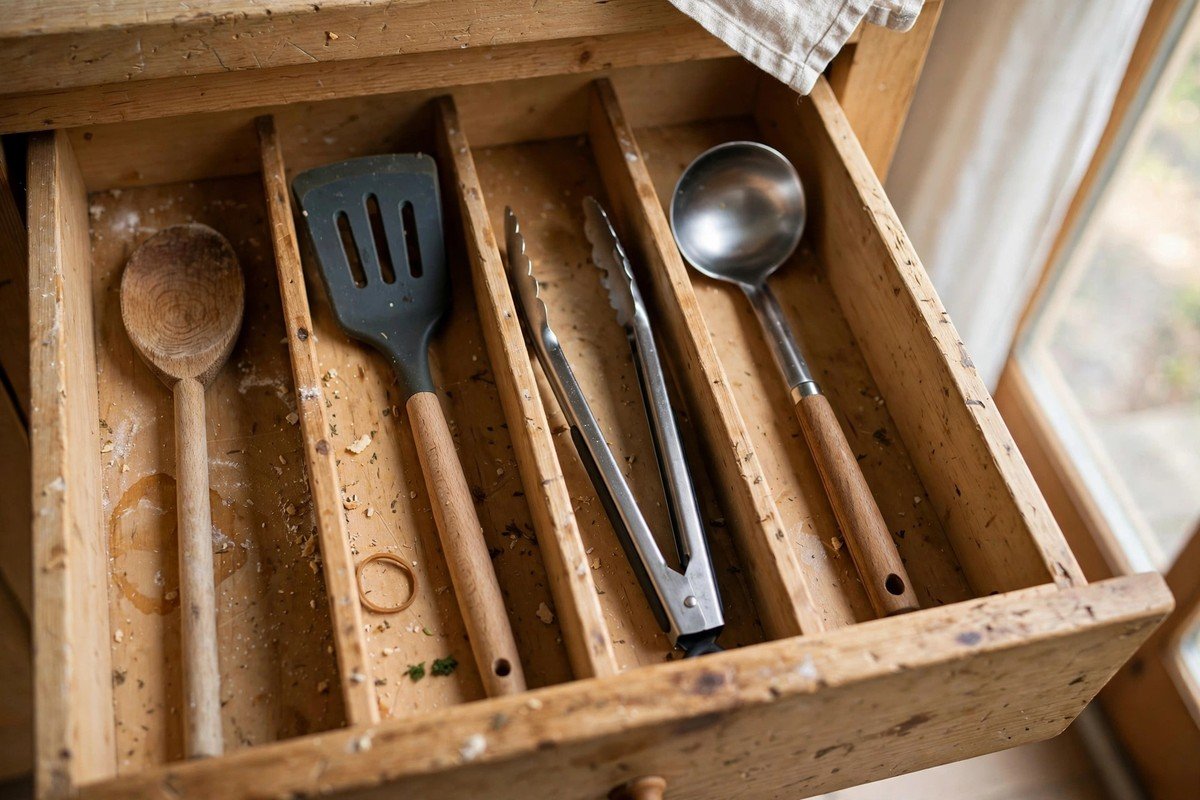
Dividers only help when they fit well. I measured my drawers first and wrote the numbers down so I would not forget them. A divider that slides around is almost worse than no divider at all. I like simple trays that sit flat and leave no wasted space at the sides. If a tray is a little short, I fill the gap with a small dish for clips or twist ties. A snug fit keeps everything in place when I pull the drawer open fast.
3. Give Your Utensil Drawer a Fresh Reset
My utensil drawer was the messiest one in my kitchen. I took everything out, wiped the drawer clean, and put back only what I use each week. I placed everyday tools at the front, so I can grab them without thinking. Longer tools sit at the back in their own row. Now I can see every handle at a glance, and putting things away takes seconds.
4. Turn a Drawer Into a Spice Drawer
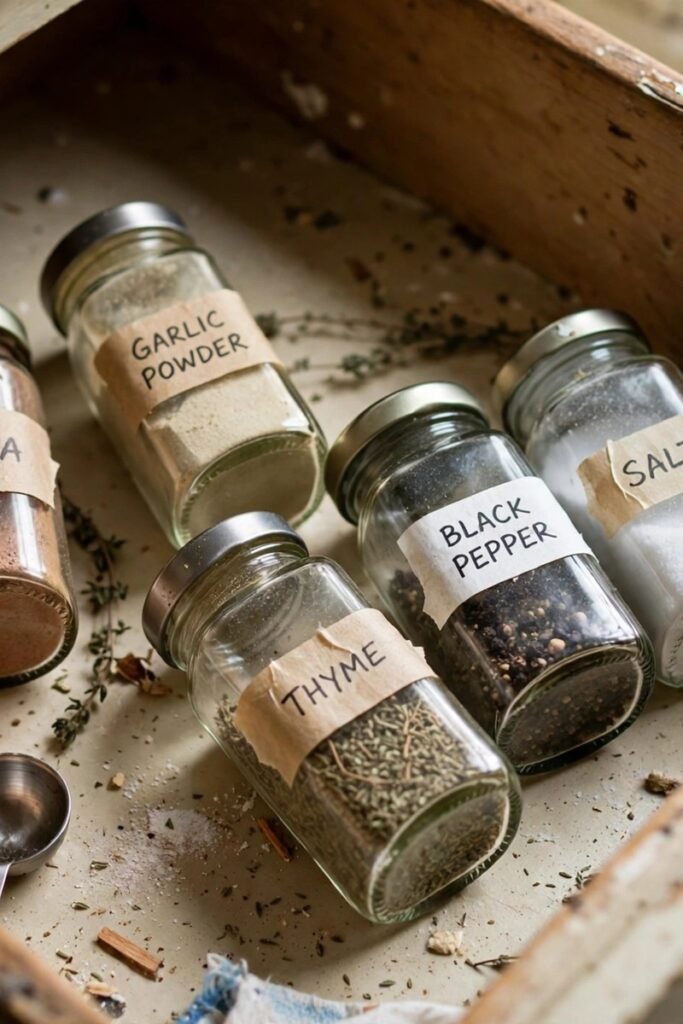
Spices were hard to find when they stood in a crowded cabinet. I moved them into a shallow drawer and laid the jars on their sides with the labels facing up. I can see every spice as soon as I open the drawer. I keep the spices I cook with most near the front, and the ones I use now and then at the back. Cooking feels easier when the flavor I want is right there.
5. Tame the Junk Drawer Without Guilt
Every kitchen has a junk drawer, and mine is no different. I gave it a simple job. It holds the scissors, the tape, a pen, batteries, and the small tools I need around the house. Everything else had to leave. I used small boxes inside the drawer so each group has its own spot. The scissors go back in the same box every time. A junk drawer does not have to be perfect. It just has to stay useful.
6. Store Knives in a Way That Feels Safe
I used to keep knives loose in a drawer, and I worried every time I reached in. A simple in-drawer knife block changed that for me. Each knife has its own slot, so the blades stay sharp and my hands stay safe. I keep the block near the cutting board, so prep work flows in one direction. If you do not have a block, a knife guard for each blade works well too. I never stack knives on top of each other now.
7. Set Up a Baking Drawer You Can Enjoy
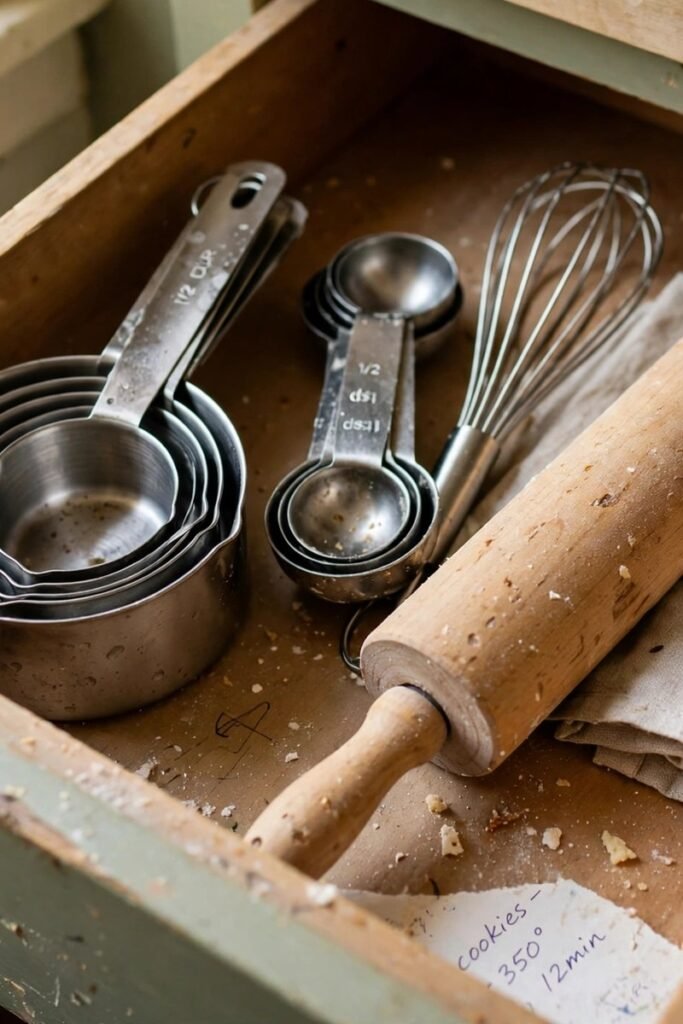
Baking used to mean pulling tools from four different places. I made one drawer for it instead. It holds my measuring cups, measuring spoons, a whisk, a rolling pin, and a few cookie cutters. I keep the cups nested together and the spoons on a ring so they do not scatter. Parchment paper and cupcake liners sit in a small box at the side. When I want to bake, I open one drawer and I am ready.
8. Use Labels That Last Through Daily Use
Labels help when more than one person cooks in the kitchen. I label the inside of the drawer or the front of each tray, so everyone knows where things belong. I use plain, clear words like spoons, baking, and spices. I avoid fancy labels that look nice but confuse people. I also keep labels short, because long labels peel and fade faster. A drawer that is easy to read is a drawer that stays tidy, even on busy days.
9. Do a Five-Minute Reset Each Week
I do not try to keep my drawers perfect all week. I pick one evening, usually before I start cooking, and spend five minutes on a quick reset. I put stray tools back where they belong and wipe up any crumbs. I check for lids without containers and spoons that ended up in the wrong drawer. Five minutes is short enough that I actually do it. This small habit keeps the drawers from sliding back into chaos.
10. Let Go of What You No Longer Use
This was the hardest step for me. I kept tools because someone gave them to me, or because I thought I might need them one day. I kept one of each tool I truly use and let the extras go. I kept the peeler that feels good in my hand and passed on the other two. My drawers feel lighter now, and cooking feels lighter too. Letting go is not about having less for its own sake. It is about making room for the tools that serve your everyday life.
Conclusion
Organized drawers did not change how I cook overnight, but they changed how cooking feels each day. I spend less time searching and more time enjoying the food I make. Start with one drawer, keep what you love, and let the rest find a better home.