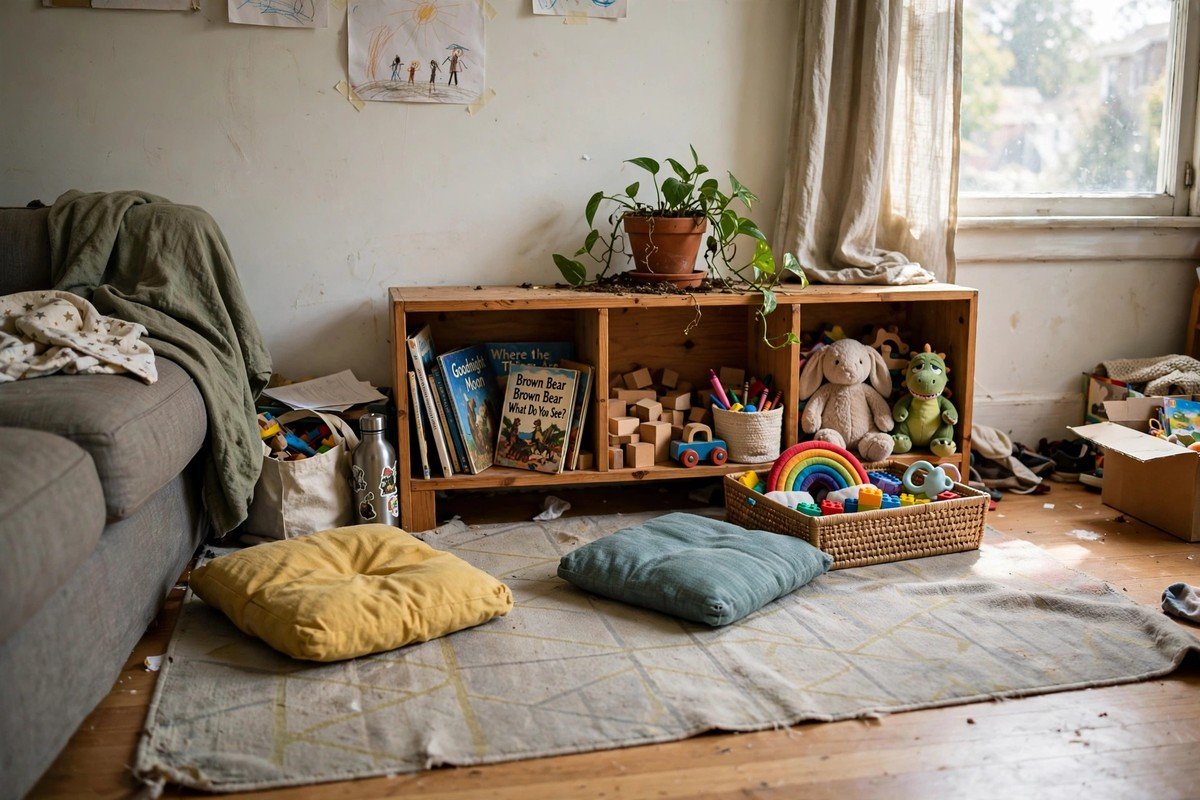
We do not have a separate playroom, so the kids play right in our living room. For a while toys spread across the whole floor, and I spent every evening picking up blocks from under the sofa.
1. Mark the Corner With a Rug
A rug is the simplest way to show where play happens. I laid a flat, washable rug in one corner of the living room, big enough for two kids to sit and build. The edge of the rug is the boundary, and the kids understand it without me saying much. Toys that stay on the rug are fine, and toys that wander off get picked up. When the rug is rolled up for a party, the corner disappears, and the room looks grown-up again.
2. Use a Low Shelf They Can Reach
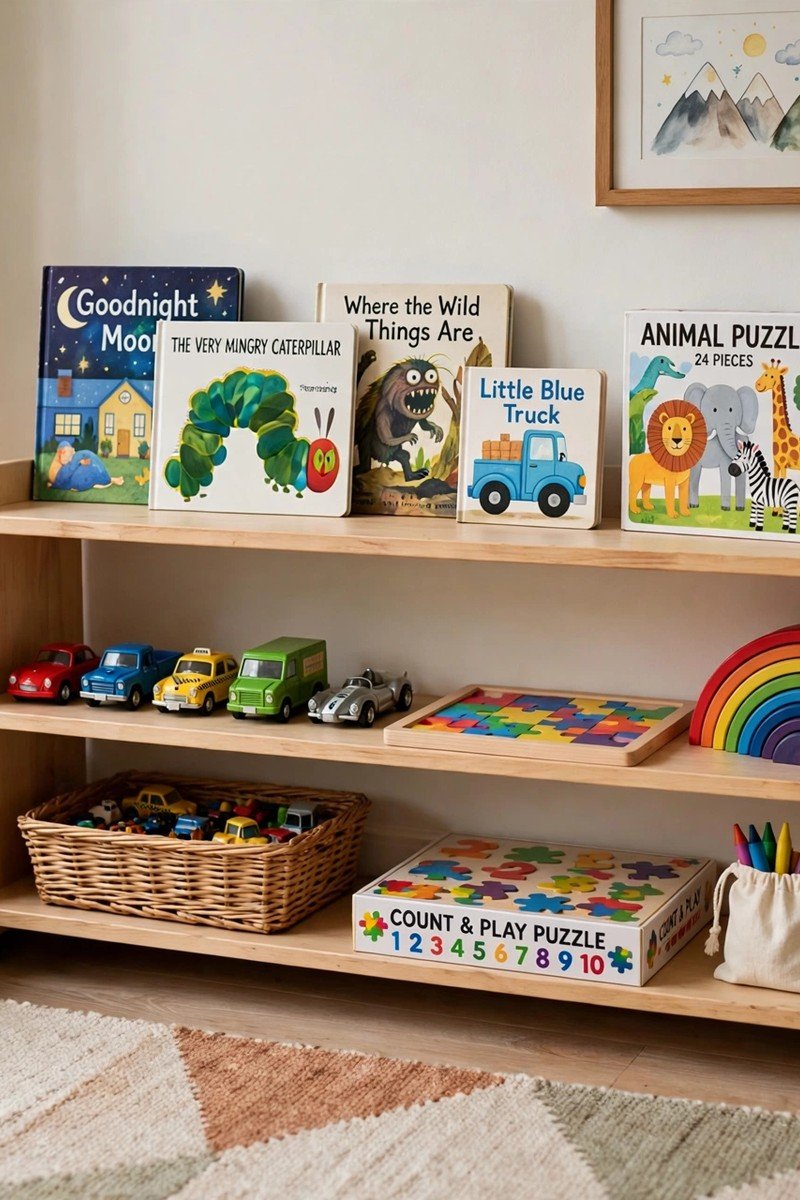
A low bookshelf changed everything for us. Now each shelf holds a few things at a height they can reach, and they can see what they want. I keep the shelf against the wall and fix it so it cannot tip. Books stand on one end, puzzles sit flat on the next shelf, and cars line up on the bottom. When a child can reach and return things alone, tidy-up stops being a battle.
3. Rotate Toys in Baskets
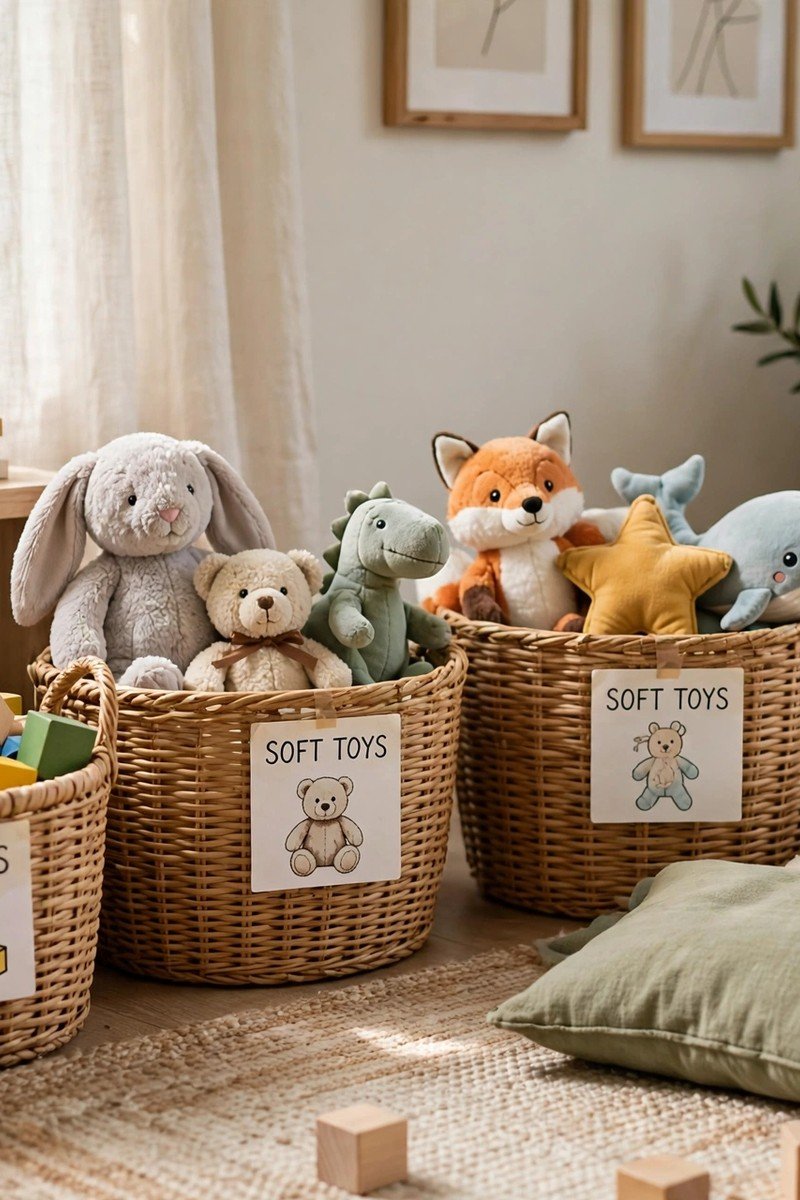
I keep half the toys in baskets in a closet, and I swap them every week or two. The kids get excited about toys they had forgotten, and the corner never gets overcrowded. Each basket has one kind of toy in it, like blocks in one and animals in another. I label the baskets with a simple picture taped to the front, so even a child who cannot read yet knows what goes where.
4. Hang Art Low, at Their Height
Children look at walls from a lower height than adults do, so I hung a small art rail at their eye level in the play corner. We clip their drawings to it with wooden pegs, and they change the display themselves. I keep the rail short, just wide enough for three or four pictures. When a new drawing goes up, an old one comes down into a folder, so the wall never gets crowded.
5. Build a Soft Spot With Cushions
A pile of floor cushions makes a corner feel like a nest. I stacked three large cushions against the wall, with a soft blanket folded on top. The kids read there, build pillow forts, and rest when they are tired. I chose cushion covers that wash easily, because snacks and paint happen. When friends visit, the cushions become extra seats, and the corner turns into a gathering spot without any rearranging.
6. Add a Small Table for Drawing and Crafts
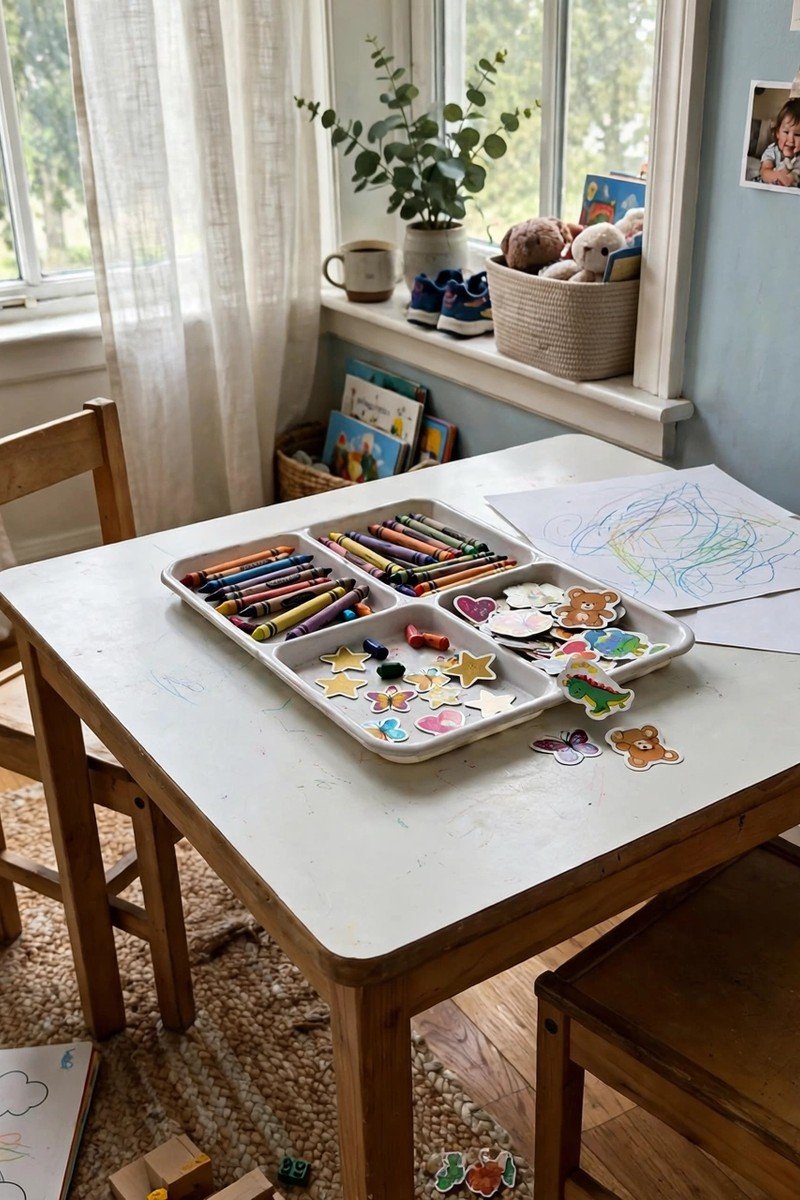
A child-sized table with two small chairs gives messy play a home. Ours sits in the corner with a wipe-clean top, and I keep crayons, paper, and stickers in a tray on top of it. Crafts stay on the table instead of spreading to the dining table, which I appreciate at mealtimes. I put a plastic mat under the table for paint days, and it rolls up when we are done.
7. Keep Books in a Basket They Can Flip Through
Books in a regular shelf spine-out are hard for small children to choose from. I put picture books upright in a low basket, covers facing out, so the kids can see the pictures and pick one. The basket sits beside the cushions, and reading happens right there on the floor. We read together most evenings, and the basket makes it easy for a child to bring me a book without asking. I change the books in the basket when we visit the library, so there is always something new to look at.
8. Make Room for Pretend Play
Pretend play needs very little space, but it needs a little stage. I cleared one shelf for a small play kitchen set, with a few pots, cups, and pretend food. The kids cook meals, serve them to stuffed animals, and copy what they see us do in the real kitchen. A small tent or a cardboard box house works the same way. I keep pretend toys in one basket so they can be packed away fast.
9. Give Every Toy a Picture Label
Labels with pictures help children tidy up on their own. I took photos of what belongs in each basket, printed them small, and taped them to the front. A photo of blocks goes on the block basket, and a photo of dolls goes on the doll basket. At clean-up time I say match the picture, and the kids do most of it themselves. It takes a little setup, but it saves me from sorting a mixed basket every night. Picture labels also help visitors and grandparents, who can tidy up without asking where things go.
10. End Play With a Five-Minute Song
Tidy-up time works best when it has a clear ending. We play the same short song every evening, and we pick up together until it ends. The kids race the song, and most things are back in baskets by the last note. I keep the routine short and cheerful, and I help instead of just watching. A corner that is tidy at night is inviting again in the morning, and the living room feels like a shared room again, not a playroom that took over.
Conclusion
A play corner does not need much space or many toys. It needs a clear spot, low storage a child can use, and a simple routine for putting things away. Give play one corner, and the rest of your living room can stay calm, for kids and grown-ups alike.