Cleanup time in my house used to end with toys shoved under the bed and clothes piled on a chair. The room looked tidy for about ten minutes, and then everything came back out. What changed things was storage that kids can actually use on their own. When a child knows exactly where a toy goes, cleanup stops being a battle and starts being a habit.
1. Low Open Shelves They Can Reach
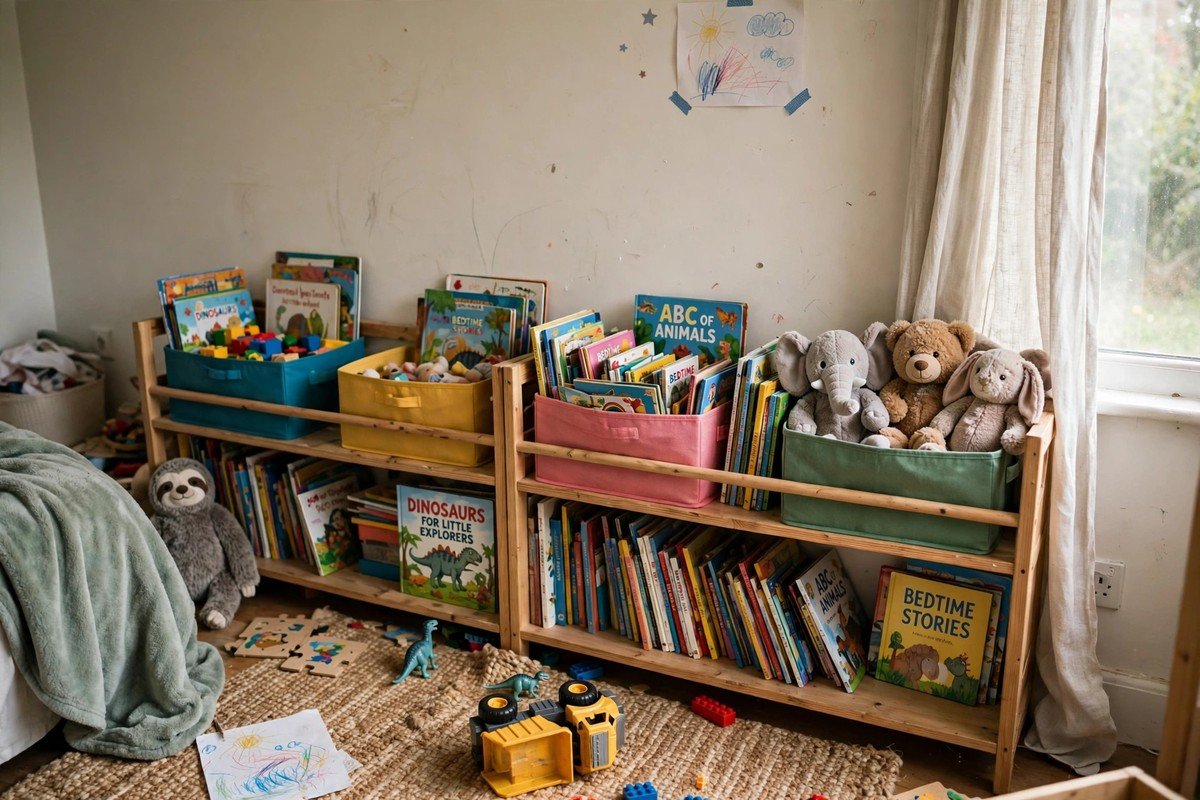
Low open shelves are the single best change I made in my child’s room. When shelves sit at a child’s height, kids can put books and toys away without asking for help. I keep the shelves open, with no doors to open and close, so cleanup takes seconds. I sort the shelves by type: books on one, blocks on another, stuffed animals on the lowest. The labels are simple pictures, which work even before a child can read well.
2. One Bin for Each Kind of Toy
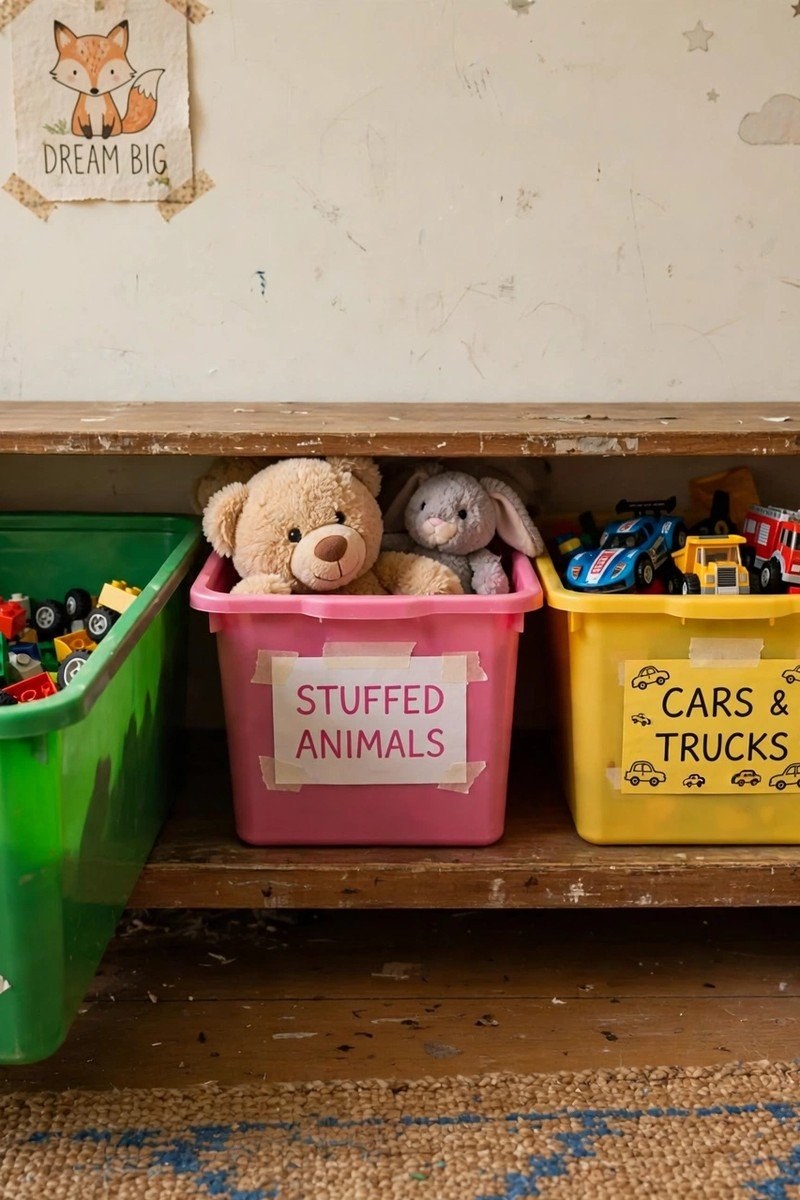
One bin for each kind of toy keeps cleanup simple and sorting obvious. Cars go in the car bin, dolls go in the doll bin, and art supplies go in their own bin with a lid. I use bins in different colors so my child can spot the right one fast. The bins sit on the floor or on the lowest shelf, never stacked high where they tip over. When a bin gets too full, that is my signal to rotate toys out for a while.
3. A Toy Rotation Box in the Closet
A rotation box in the closet holds toys that are taking a break. Every few weeks, I swap a few toys from the box with toys from the shelves, and my child treats the returning toys like new ones. The box has a lid and a simple label, and it sits on a high closet shelf out of daily reach. Rotation also keeps the room from feeling overcrowded, which makes cleanup faster. I check the box each season and pass along toys that no longer get played with.
4. A Laundry Hamper They Can Actually Use
A small laundry hamper in the child’s room makes a big difference at bedtime. Dirty clothes go straight into the hamper instead of landing on the floor or the bed. I picked a hamper with a wide opening and no lid, since lids slow kids down and get left open anyway. The hamper sits next to the dresser, right where clothes come off. On laundry day, my child carries the hamper to the laundry room, which turns a chore into a small job they own.
5. Hooks at Child Height by the Door
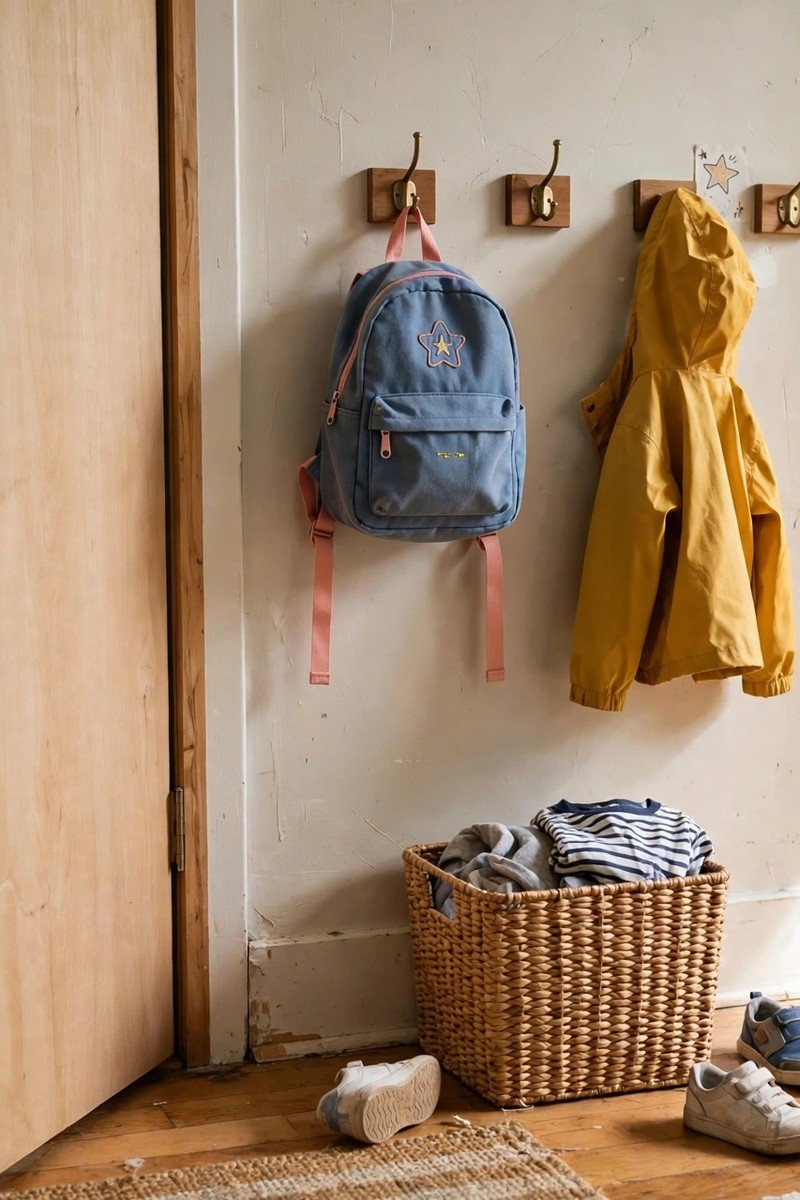
Hooks by the door, placed low enough for a child to reach, hold backpacks, jackets, and hats. I use sturdy hooks screwed into the wall, not stick-on hooks that peel off with a heavy backpack. Each child gets two hooks: one for the backpack and one for a jacket. The hooks keep coats off the floor and make mornings faster, since everything is in one spot by the door. I check the screws once a month because kids pull hard when they are in a rush.
6. Under-Bed Boxes With Wheels
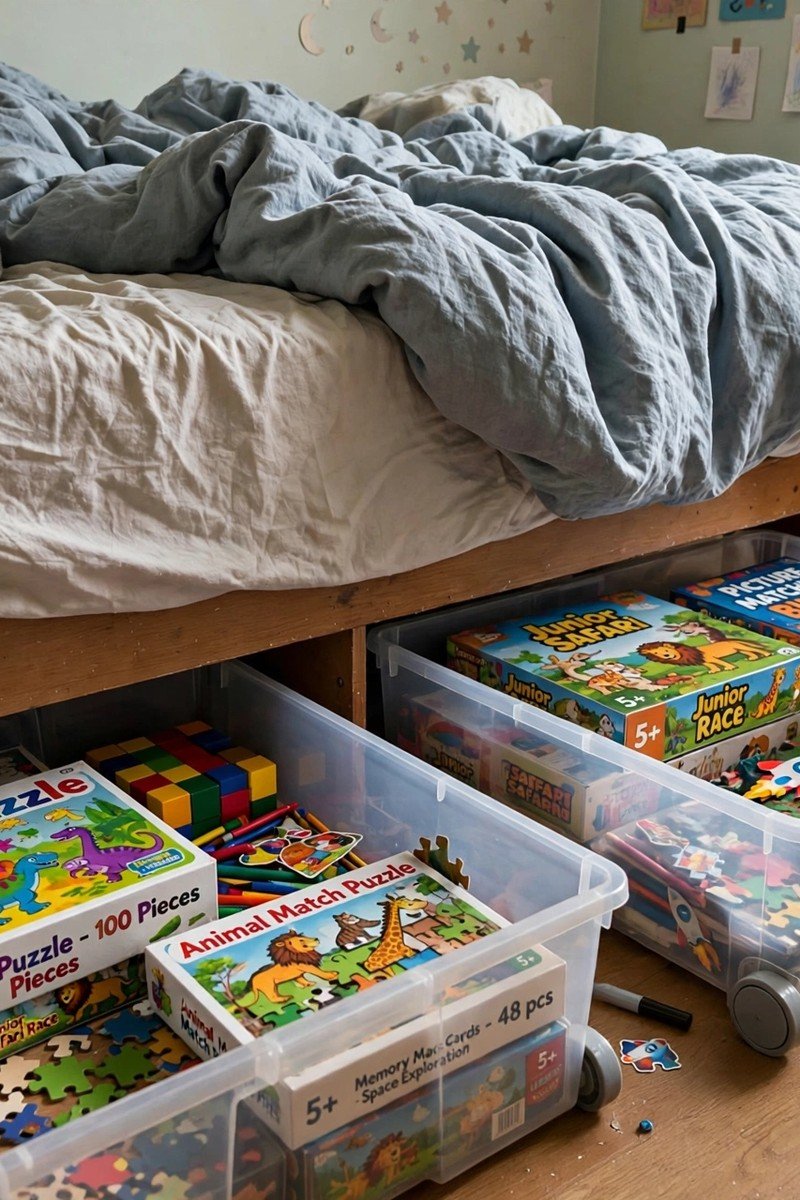
Under-bed boxes with wheels turn wasted space into storage that kids can pull out themselves. I use shallow boxes for puzzles, board games, and extra bedding, and the wheels keep the boxes from scratching the floor. The boxes have handles on the ends so small hands can grip them. I keep a list on the inside of the closet door of what lives under the bed, so I can find things without pulling every box out. Dust the boxes monthly, since under-bed space collects dust fast.
7. A Book Basket Near the Reading Spot
A book basket near the reading corner holds the books my child is reading right now. It sits on the floor next to the pillow and lamp, and it keeps books from piling up on the bed. I rotate the books in the basket weekly, swapping in a few from the shelf. The basket is soft-sided, so it does not hurt if a child bumps into it during play. When the basket is full, we return books to the shelf together, which keeps the collection in order.
8. Clear Jars for Small Treasures
Small treasures like rocks, beads, and tiny figures need their own home, or they end up scattered across every surface. Clear jars with screw-on lids hold these collections where kids can see them but not spill them. I keep the jars on a shelf, not on the floor, so they do not get kicked over. Each jar holds one kind of treasure, and my child helps decide what goes where. The jars also make it easy to see when a collection has outgrown its jar.
9. A Dresser Drawer for Each Day
I set up dresser drawers by type of clothing: tops in one, bottoms in another, pajamas in the third. Inside the top drawer, I lay out outfits for the week in a row, so my child can pick one each morning without pulling everything out. Picture labels on the drawer fronts show what belongs inside. This setup cuts morning arguments and keeps the dresser tidy. I refold and reset the drawers on Sunday, which takes about fifteen minutes.
10. A Cleanup Song and a Timer
The last idea is not storage at all, but it makes every storage idea work better. We set a five-minute timer and play one cleanup song, and the goal is to get everything back before the song ends. My child races the timer, and the bins and shelves make winning possible. I help with the high shelves and leave the low ones to my child. When the timer rings, we stop and admire the tidy room together, which makes cleanup feel like a win instead of a chore.
Conclusion
Kids clean up best when storage fits their size, their reach, and their way of thinking. Keep bins low, labels simple, and every toy with a clear home. Cleanup gets easier, and the room stays tidier for longer than ten minutes.