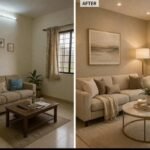
Living in a studio means one room has to do many jobs. My first studio had my bed, my desk, and my sofa all in one open space, and it never felt restful. I could see my work desk from my pillow, and I could see my bed from my dining chair. Adding a divider changed everything. The room was the same size, but it finally felt like it had rooms inside it. These ideas helped me divide the space without building walls.
1. Use a Tall Bookshelf as a Room Divider
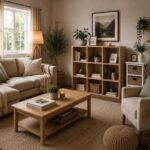
A tall bookshelf is my favorite divider because it divides and stores at the same time. I placed an open shelf unit between my bed and my living area, with books and baskets facing the living side. The shelf lets light through, so the sleeping area never feels dark or closed in. Keep the top shelf light, with a plant or a framed photo, so the unit does not feel heavy.
2. Hang a Curtain From the Ceiling
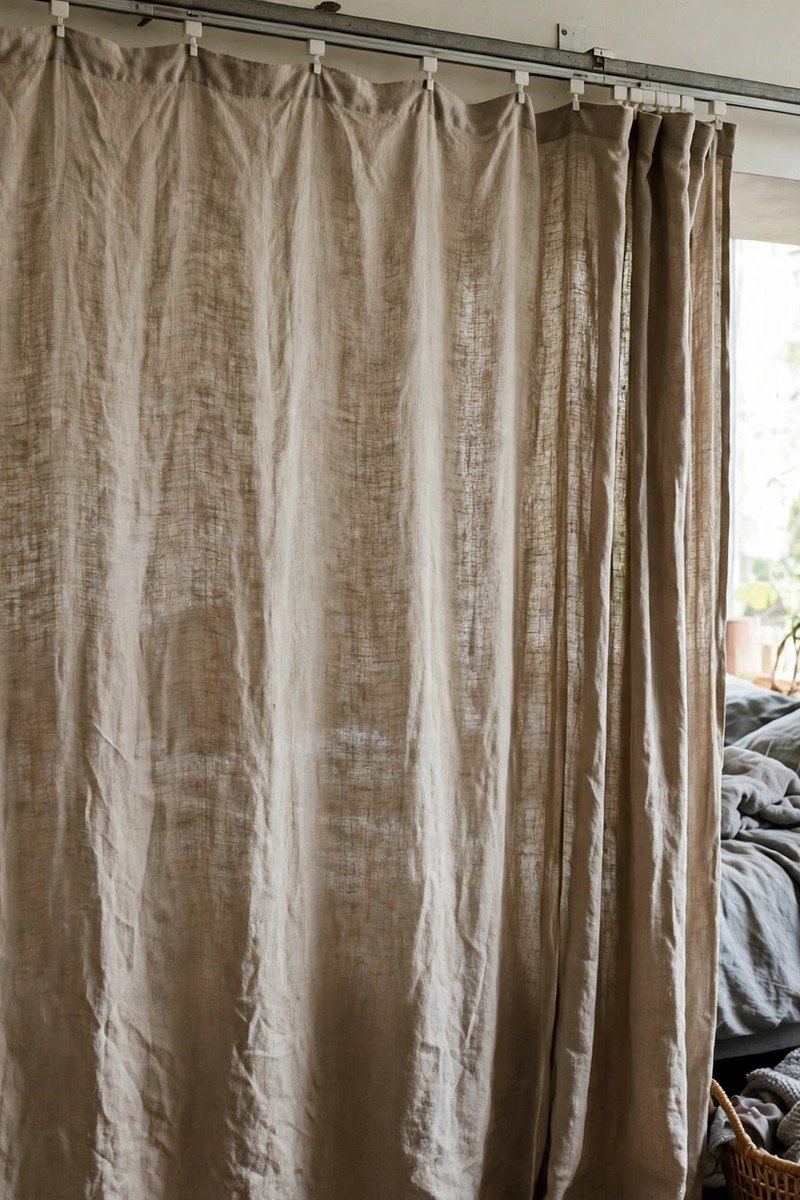
A curtain is the softest way to divide a studio. I hung a ceiling track above my bed area and added a plain linen curtain that I can pull closed at night. During the day I pull it back, and the room feels open again. The curtain also softens sound a little, which helps me sleep.
3. Place a Sofa With Its Back to the Bed
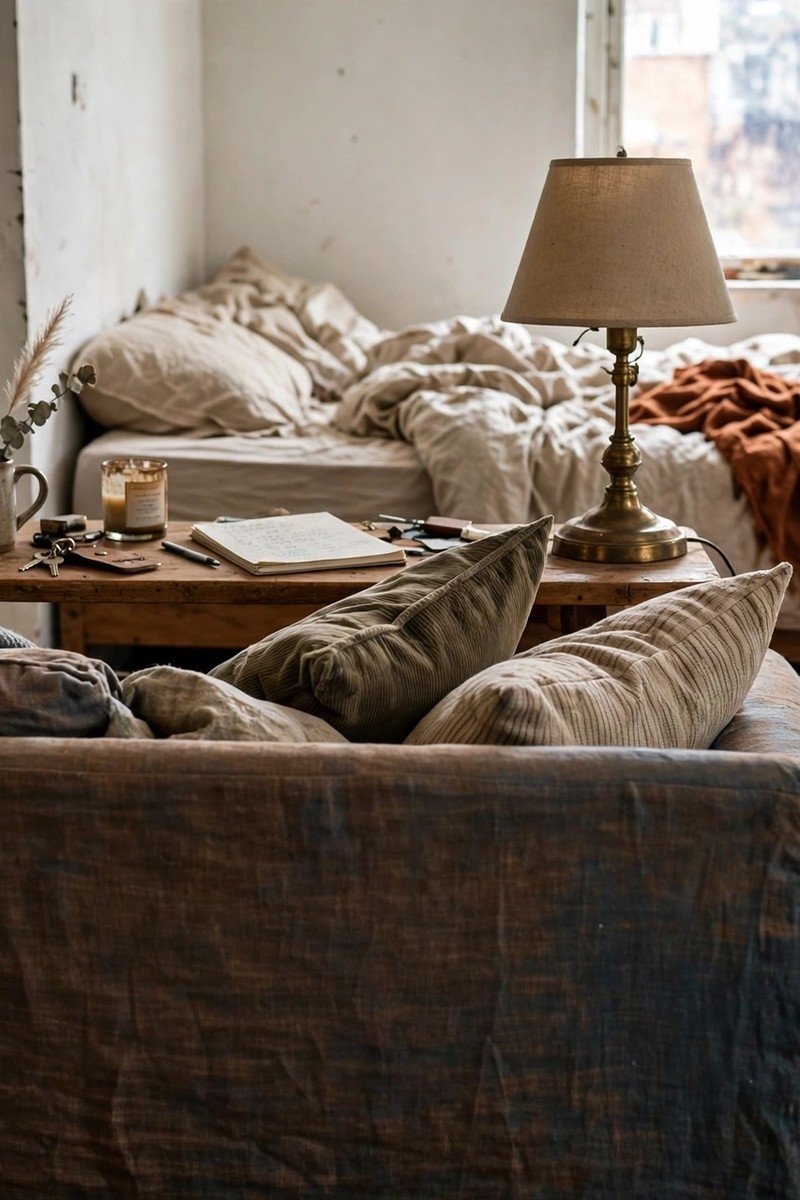
Turning the sofa around can create a living room in seconds. I placed my sofa with its back facing the bed, and suddenly the bed was behind me and the living area was in front of me. A console table behind the sofa adds a surface for a lamp and a book, and it makes the divide feel intentional. Keep a rug under the sofa to mark the living zone clearly.
4. Add a Folding Screen You Can Move
A folding screen is a divider you can move whenever you need to. I use a three panel wooden screen beside my bed, and I fold it flat against the wall when guests come over. The screen gives me privacy for changing clothes and for sleeping, without making the room feel small. Choose a screen with a simple pattern so it does not fight with the rest of the room. A folding screen is also useful as a backdrop for video calls, hiding the bed from view.

5. Use a Rug to Mark Each Zone
Rugs mark zones without blocking light or air. I have one rug under my sofa and chairs, and a smaller, softer rug beside my bed. The change in texture underfoot tells my brain that I have moved from one zone to another. A rug also softens sound in a hard floored studio. This is the simplest divider of all, and it works even in a very small space.
6. Build a Half Height Storage Unit
A low storage unit divides a space while keeping the room feeling open. I use a low chest of drawers between my sleeping area and my desk, and I can see over it easily. Because it is low, light still travels across the room. This is a good choice if tall dividers make you feel closed in. Keep the top tidy, because it will be visible from both sides.
7. Hang Plants to Soften the Divide
Hanging plants make a divider feel alive. I hung two planters from the ceiling on either side of my sleeping area, with trailing leaves that fall like a soft curtain. The plants do not block the room, but they mark the edge of the zone clearly. Choose plants that like the light in your studio, and water them over the sink so you do not drip on the floor. A plant divider suits a studio with good natural light. It also makes the whole room feel fresher.
8. Use a Desk as the Boundary for a Work Zone
A desk can mark the edge of a work zone. I placed my desk facing the wall, with a small shelf unit on one side, and that corner became my office. When I finish work, I turn my chair away and the work zone is behind me. Keep work papers and chargers inside the zone, so they do not spread into the living area. Your brain learns that lamp off means work is done.
9. Add a Sliding Panel for Flexible Privacy
A sliding panel on a ceiling rail gives you privacy when you want it and openness when you do not. A friend in a studio uses a light wood panel that slides across her sleeping area at night. During the day she slides it back, and the studio feels like one big room again. Sliding panels need a straight ceiling rail, so measure carefully before you buy. Choose a panel that is light enough to slide with one hand.
10. Keep a Clear Path Between Zones
Every divider needs a clear path around it. I learned this when I placed my bookshelf too close to the wall and had to squeeze past it every morning. Leave at least enough room to walk through comfortably with a laundry basket in your hands. A divider should help you move through the room, not block you. Walk the path a few times after you place a divider, and move it if you bump into it. A studio feels bigger when you can move freely through it.
Conclusion
A studio apartment does not need walls to feel like it has rooms. A shelf, a curtain, a rug, or a well placed sofa can give each part of your life its own place. Start with one divider, live with it for a week, and adjust it until the room works for you.