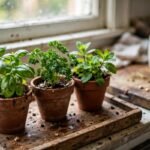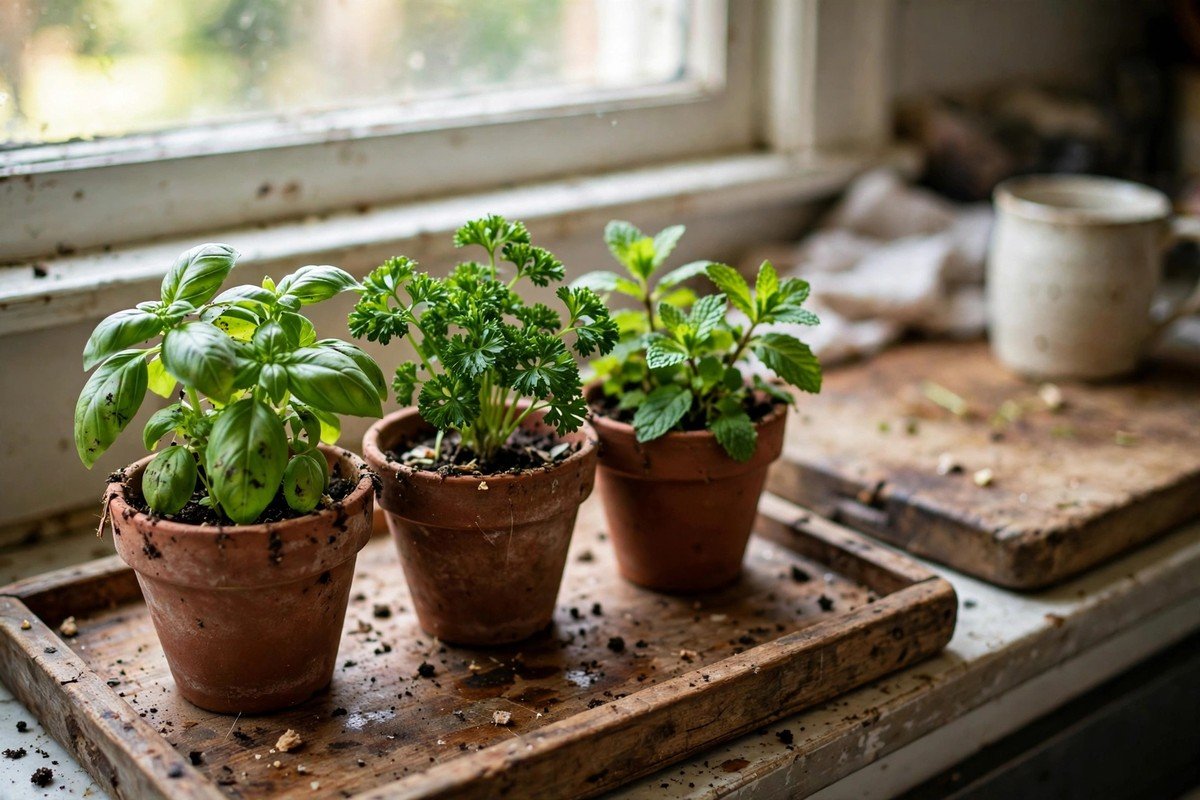
My first herb garden was three small pots on the kitchen windowsill, and I almost gave up on it in the first week. The basil drooped, the soil looked dry, and I was sure I had no talent for plants. Then I moved the pots closer to the glass, watered them in the morning instead of at night, and watched them come back to life. Now I snip fresh herbs while dinner is cooking, and that small green row makes my kitchen feel alive.
1. Start With Three Herbs You Cook With Often
Do not buy ten herbs at once. Start with three you actually use, like basil, parsley, and mint. I cook with basil in pasta, parsley in salads, and mint in tea, so those three earn their spot on my sill. Put a small label in each pot so you remember what is what. Once those three are doing well, you can add one more.
2. Pick Pots With Drainage Holes
Herbs hate sitting in water. I learned this when my first mint plant turned yellow because its pot had no hole at the bottom. Choose pots with a drainage hole and a small saucer underneath to catch extra water. If you fall in love with a pot that has no hole, use it as a cover pot and keep the plant in a plain plastic pot inside it. Lift the inner pot out to water it, let it drain, and put it back.
3. Give Them the Sunniest Spot You Have
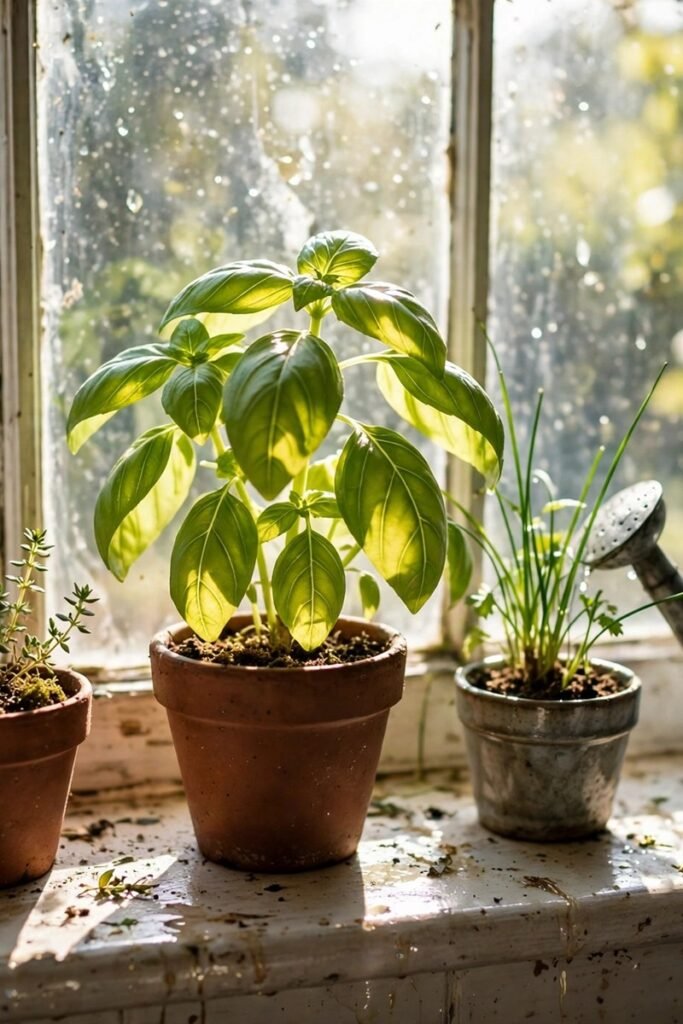
Most kitchen herbs want at least six hours of sun a day. My south facing window works best, and I keep the pots right against the glass where the light is strongest. Turn each pot a quarter turn every few days so the plant grows straight instead of leaning toward the window. Light matters more than looks.
4. Water in the Morning and Check the Soil First
I water my herbs in the morning, before the day gets busy. I press my finger into the soil first, and if the top inch feels dry, I water. If it still feels damp, I wait another day. Too much water causes more trouble than too little water, and most herbs recover from a dry day much better than from soggy roots. Water slowly until a little water comes out of the drainage hole. Then empty the saucer so the pot is not sitting in a puddle.
5. Use a Shallow Tray to Group Small Pots Together
A shallow tray keeps a windowsill garden tidy. I use a wooden tray that holds four small pots, and it catches drips and fallen leaves. Grouping the pots together also helps the plants stay a little more humid, which they seem to like. I keep the tray near the sink so watering is easy and I do not have to carry pots across the kitchen. That one habit keeps the sill clean.
6. Snip Often to Keep Plants Bushy
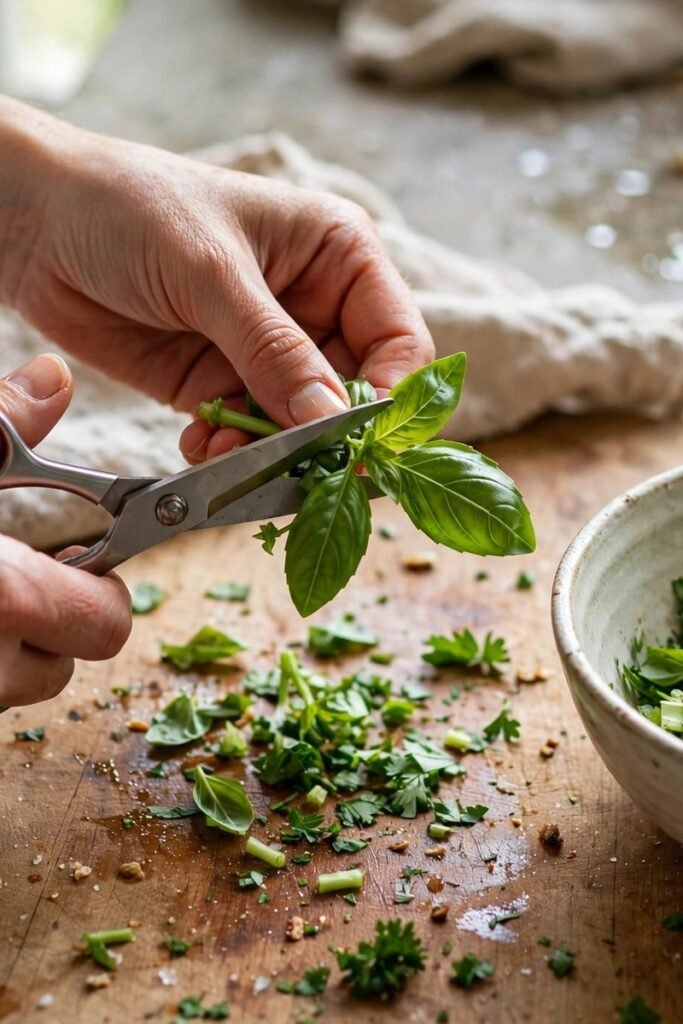
Snipping herbs often helps them grow fuller. I used to feel bad cutting my basil, but the plant grew back bushier every time I trimmed it. Snip just above a pair of leaves, and two new stems will grow from that spot. Take a little from each plant instead of stripping one plant bare. I snip in the morning when the leaves are fresh and full of scent.
7. Add Chives for Easy Everyday Flavor
Chives are the easiest herb I have ever grown. They grow back fast after cutting, they do not ask for much, and a handful of snipped chives makes eggs, potatoes, and soups taste fresh. I cut them with scissors, leaving about two inches of stem so they can regrow. They like the same sunny spot and the same watering routine as my other herbs. If you are new to herbs, start with chives and build your confidence. They forgive a missed watering better than basil does.
8. Keep Mint in Its Own Pot
Mint is a happy plant, and it will take over if you let it. I once planted mint in a shared box with parsley, and within a month the mint roots had crowded everything else out. Now mint always gets its own pot, and it stays polite. A single mint plant gives me plenty of leaves for tea and for fruit salads. Keep its pot on the same tray, just separate. That way you get all the mint you want without losing your other herbs.
9. Feed Lightly Once a Month
Herbs in small pots run out of food in the soil faster than garden plants do. I feed mine once a month with a weak liquid plant food, mixed at half the strength shown on the bottle. Strong food can burn the roots and make the leaves taste bitter, so less is better here. I feed after watering, never on dry soil. If a plant looks pale or stops growing, feeding is often the fix.
10. Dry or Freeze the Extra Herbs
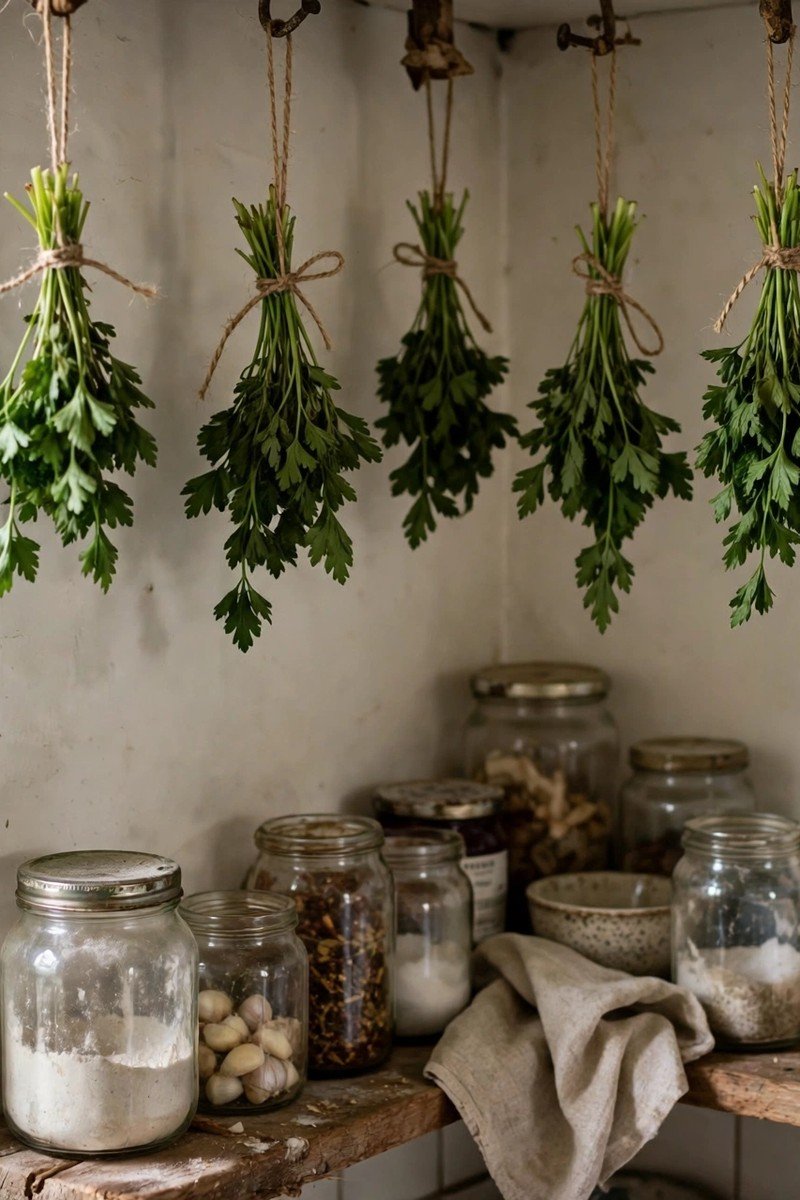
When the plants grow faster than I can cook, I save the extra herbs instead of letting them go to waste. I tie small bunches of parsley and hang them upside down in a dry corner for a week. For basil, I chop the leaves, pack them into ice cube trays with a little water, and freeze them. The frozen cubes go straight into soups and sauces. Drying and freezing mean my windowsill garden keeps feeding my kitchen long after the plants slow down.
Conclusion
A windowsill herb garden does not need to be big or perfect to be useful. Start small, give your plants sun and a little daily attention, and snip often. Before long, fresh herbs will be part of your everyday cooking, right where you need them.