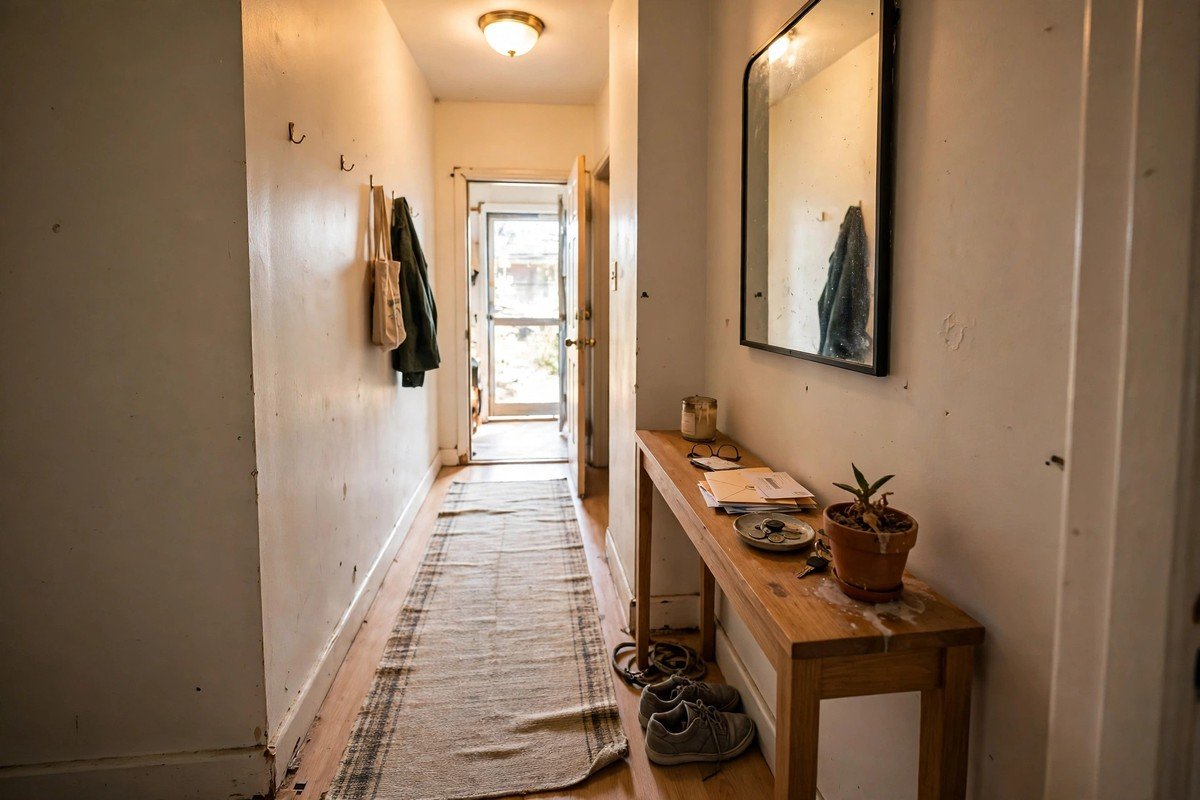
Our hallway is narrow, and for years it was just a passage I rushed through. It felt dark and bare, and nothing seemed to fit without blocking the way. I learned to work with the narrow shape instead of fighting it, and now it is one of my favorite parts of the house.
1. Measure Before You Add Anything
I measured my hallway before buying anything for it, and I am glad I did. The walkway is just wide enough for two people to pass, and that set a clear limit on how deep any furniture could be.
I wrote down the width, the length, and the spot of every door and light switch. That note saved me from buying a bench that would have blocked a bedroom door.
2. Choose a Slim Console or a Wall Shelf
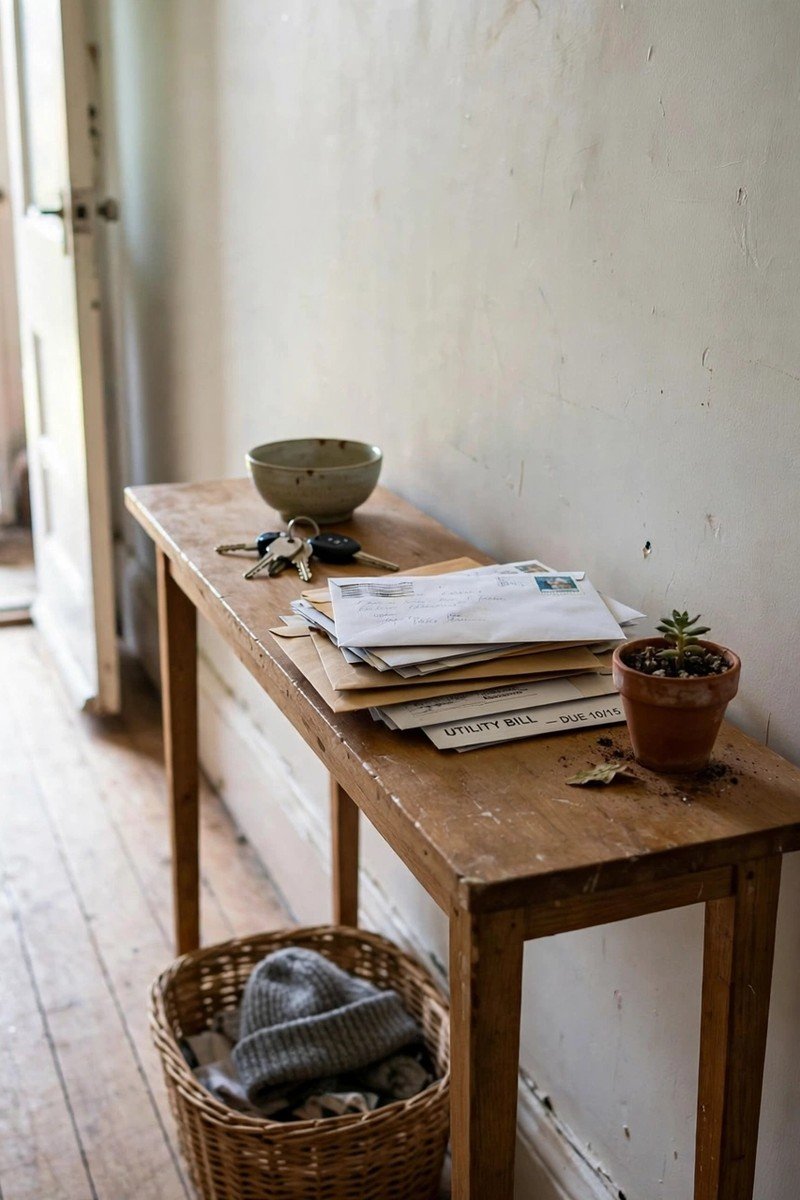
A slim console table works well in a narrow hallway, as long as it hugs the wall. Mine is barely deeper than a book, and it holds keys, mail, and a small dish without pushing into the walkway.
If even a slim table feels tight, a wall shelf does the same job with no legs at all. I have a shelf near the front door that holds a tiny plant and a bowl for keys. It keeps the floor fully clear.
3. Hang a Mirror to Open the Space
A mirror is the oldest trick for a narrow hallway, and it works. I hung a tall mirror on the longest wall, and the hallway felt wider the same day. Light bounces off it and reaches corners that used to stay dark.
Hang the mirror where it catches light from a nearby room or window. A mirror facing a blank wall just doubles the blank wall, and that does not help much.
4. Put Hooks at a Height That Works
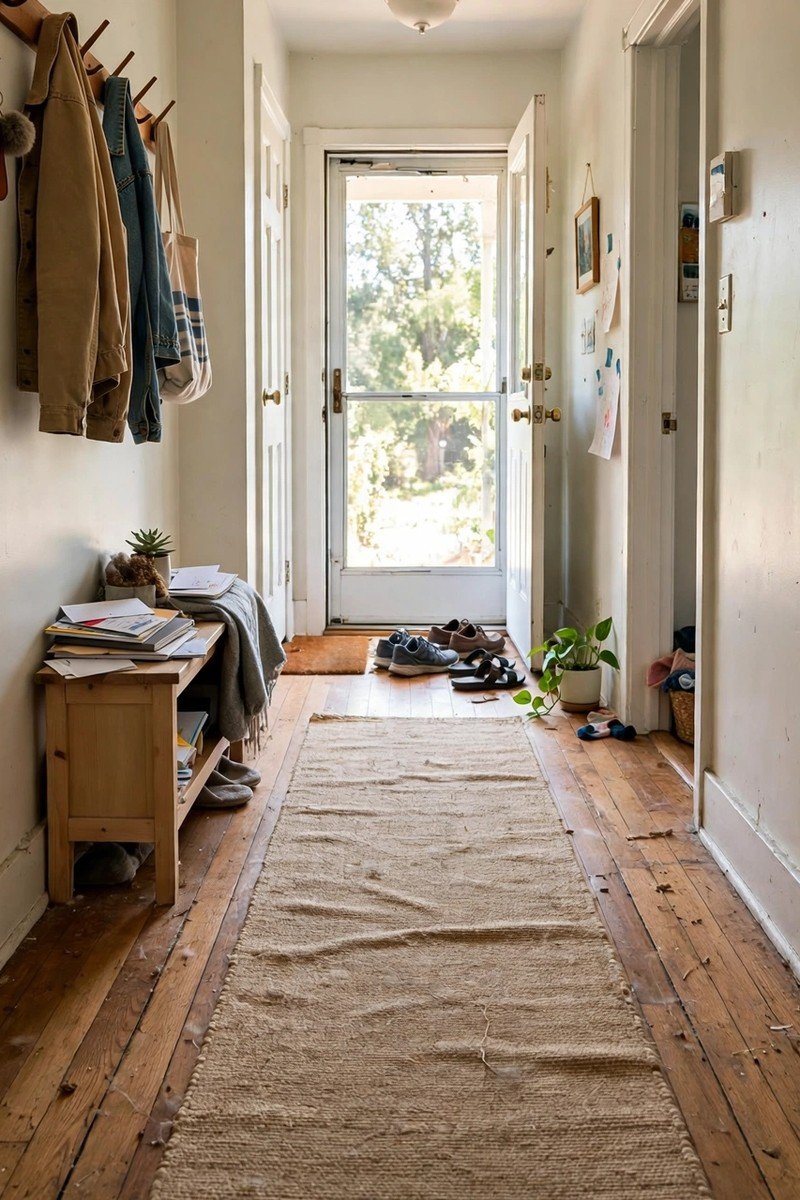
Hooks are more useful than a coat rack in a narrow space, since they sit flat against the wall. I put a row of hooks by the front door for coats and bags, at a height my whole family can reach.
I spaced the hooks wide enough that coats do not bunch up into one thick clump. When coats hang too close, they block the walkway and slip off each other.
5. Lay Down a Runner That Stays Put
A runner adds warmth to a hallway and protects the floor from daily foot traffic. I picked a flat, low runner that does not bunch up underfoot, since a thick rug in a narrow space is a tripping hazard.
A rug pad underneath keeps the runner from sliding. Mine has a thin grip pad, and the runner has stayed in place for months, even with kids running through.
6. Light the Hallway Well
Hallways often get one dim light, and that makes them feel like tunnels. I added a second light halfway down the hall, and the whole space felt friendlier at once.
Warm light works better than harsh white light here. I use warm bulbs in both fixtures, and the hallway glows softly in the evening instead of glaring.
7. Hang One Piece of Art, Hung Low Enough to Enjoy
A narrow hallway can still hold art, but one good piece beats a crowded row. I hung a single framed print at eye level, where I see it every time I walk past.
Eye level means the center of the frame sits where your eyes naturally rest, not up near the ceiling. Art hung too high feels distant, and you stop noticing it after a week.
8. Add a Basket or a Bench for Shoes
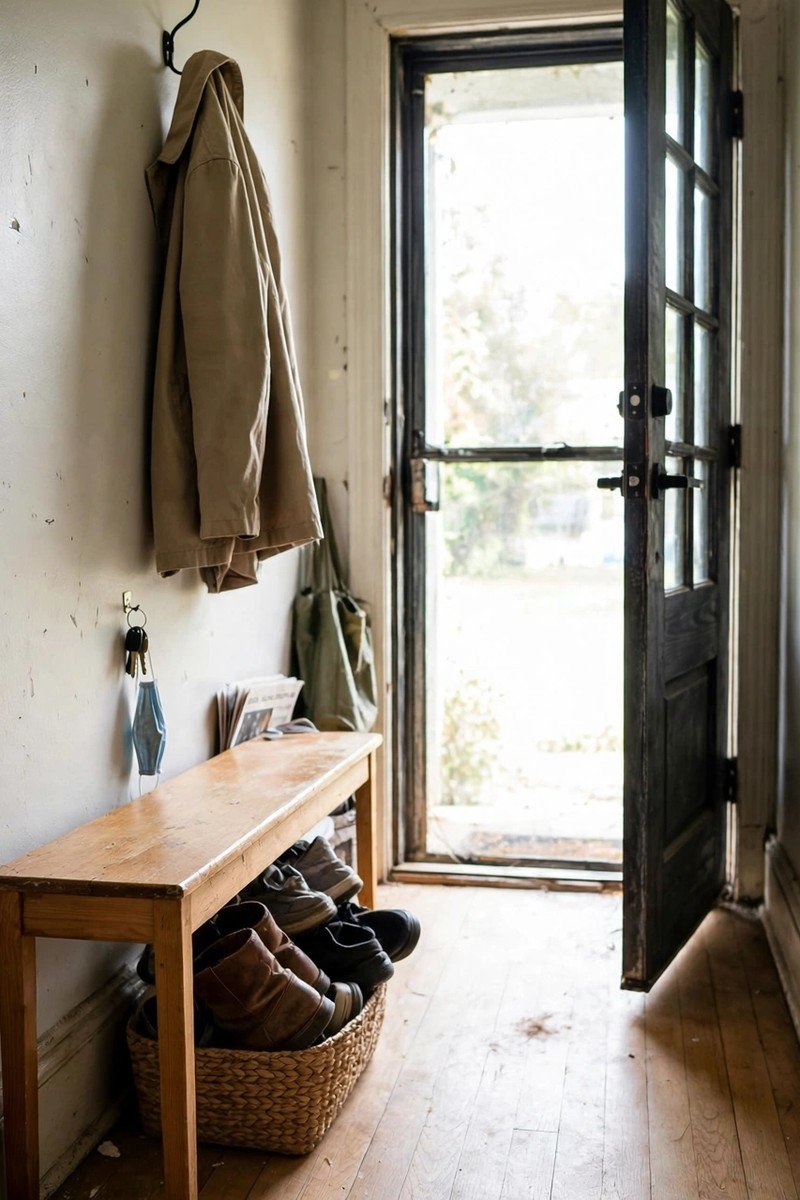
Shoes by the door are the fastest way to clutter a narrow hallway. I keep a low basket near the entrance for the shoes we wear most, and the rest live in a closet.
A bench with space underneath does two jobs at once. You can sit to put shoes on, and the shoes tuck away below. My bench is slim, and it fits against the wall without blocking the walkway.
9. Keep the Walkway Clear
This is the rule that holds all the others together. If you cannot walk through easily with your hands full, something needs to move. I check the walkway each week and move anything that drifted into it.
Watch out for bags, umbrellas, and pet toys, since those are the items that sneak into hallways. Each one gets a hook or a basket, so it has a home off the floor.
10. Finish With Something You Enjoy Seeing
End the hallway with something that makes you smile. Mine ends with a small plant on a shelf and a framed photo of our family. It gives the eye a place to land instead of a blank wall.
This final touch does not need to be big or fancy. A plant, a photo, or a simple vase all work, as long as it is something you like looking at.
Conclusion
A narrow hallway does not need much, just pieces that hug the wall, light that warms the space, and a clear path to walk through. Start with one change, like a mirror or a runner, and build from there. Small hallways can feel just as welcoming as big ones.