
Fall nights have a funny way of tricking me. I climb into bed and it feels warm enough for just a sheet, then I wake up at two in the morning chilly and reaching for something heavier. Over the past few falls I learned that layering the bed is the fix. Here are the ten ideas I keep coming back to.
1. Start with breathable sheets
Everything I do in fall starts with plain cotton sheets. They feel cool when you first get in, which is exactly what I want on a night that is not quite cold yet. I stick to lighter colors now because my warm-colored sheets used to look faded by December and I never liked that. Sheets are the base layer, so I keep them simple and let everything on top do the decorating.
2. Add a quilt or coverlet in the middle
A quilt is my favorite fall middle layer. It adds real warmth without feeling heavy the way a big comforter does. I keep a rust-colored one folded at the foot of the bed, and when the night cools down I just pull it up. The stitching gives the bed texture even when the top is folded back. One quilt does most of the work for me through all of October.
3. Fold the duvet back instead of spreading it flat
I used to spread the duvet all the way to the pillows and then shove it down with my feet at night. Now I fold it back about a third of the way. The folded part shows off the quilt or sheets underneath, and the bed looks styled without me doing anything fancy. The best part is that when I get too warm, the fold is already started for me. I just push it a little further.
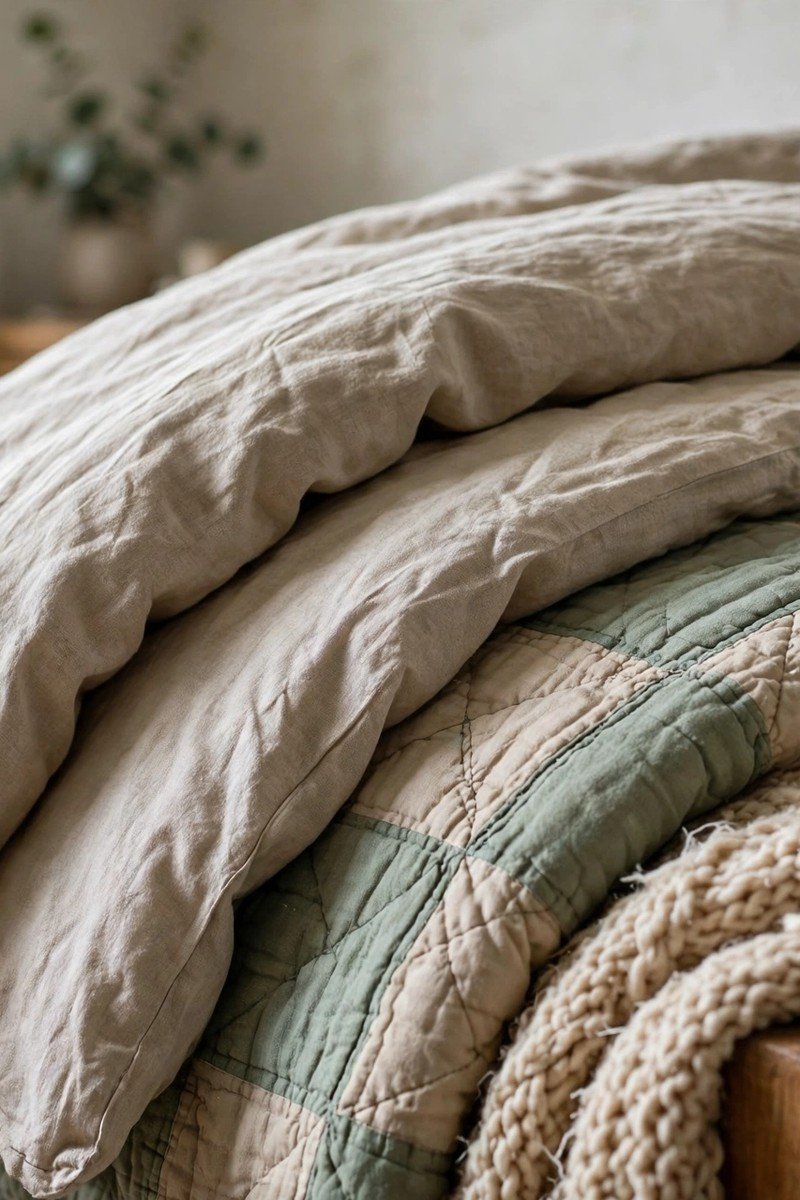
4. Put a chunky knit throw at the foot
The throw at the foot of the bed is the layer I grab most. On chilly evenings I wrap it around my shoulders while I read, then toss it back on the bed when I sleep. Mine is a cream color with a loose knit, and I honestly bought it because I loved how it looked. I fold it into a long rectangle across the foot. It never stays perfectly neat and I have stopped caring about that.
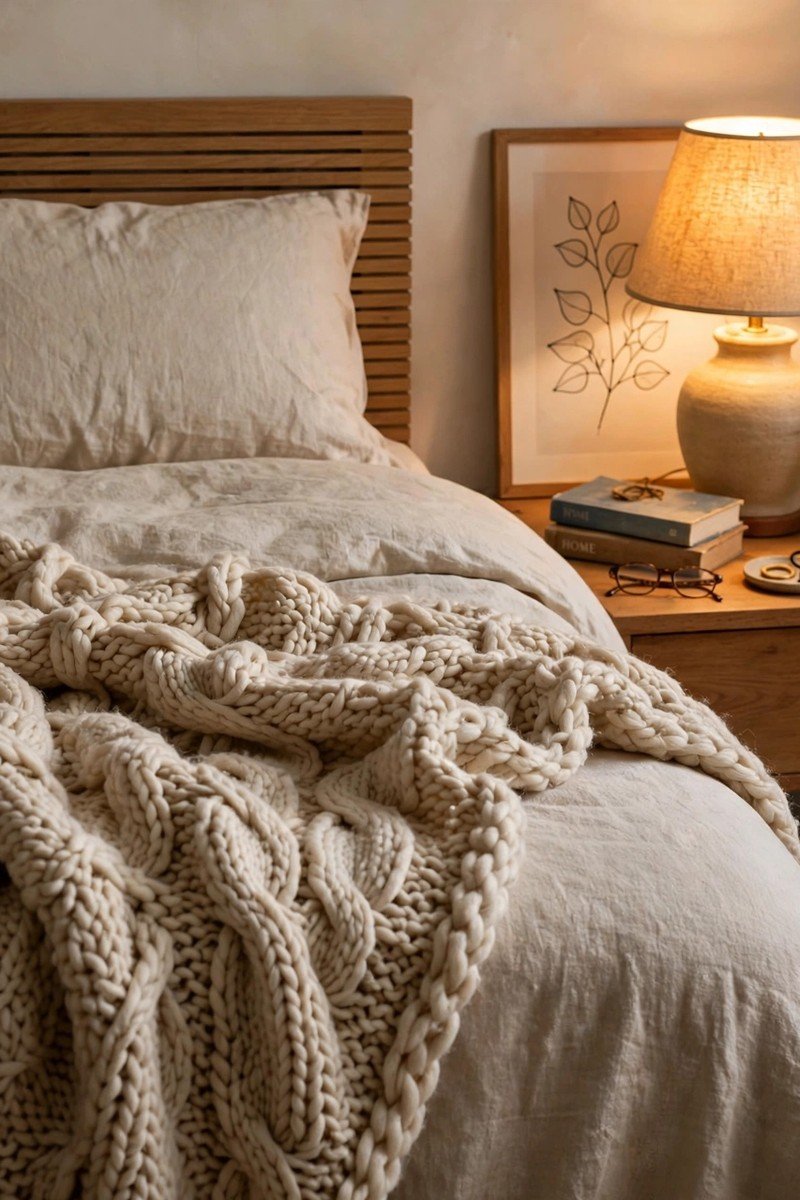
5. Use throw pillows in fall colors
Pillows are the fastest way to make the bed feel like fall. I swap my bright summer ones for rust, mustard, and cream. I keep two sleeping pillows standing up against the headboard, then lean three throw pillows in front. One of them is always slightly tilted by the next morning, and that is fine. The colors do all the talking, so I keep the patterns simple and let them be a little imperfect.

6. Mix your textures on purpose
A bed with all the same fabric looks flat to me now. I learned to mix on purpose: cotton sheets, a quilt with stitching, a knit throw, and one linen pillow. Each texture catches the light differently in the morning. Nothing has to match perfectly. I just reach for things that feel different from each other, and somehow it always comes together.
7. Try a bed runner
A bed runner is like the scarf of the bed. It is a long strip of fabric laid across the foot, and it adds a stripe of color or pattern right where the eye lands. I use one with a simple plaid pattern that I pull out every fall. It takes five seconds to lay down and it makes the whole bed look finished. My throw blanket usually goes on top of it, and the two together look great.
8. Layer for two sleepers who run different temperatures
My side of the bed and my partner’s side are two different climates. He gets warm and kicks everything off. I get cold and pull everything up. The fix was giving up on one perfect setup. He sleeps under just the sheet and quilt. I add the duvet and the knit throw on my side. Nobody is stuck or sweaty anymore, and the bed still looks tidy in the morning because the layers fold back easily.
9. Keep the top layer easy to pull back at night
This one changed my sleep more than any pillow ever did. Fall nights swing warm and cold, so I need the top layer ready to move. I never tuck the duvet or quilt tightly at the sides anymore. Everything lies loose, with the edge of the top layer right where my hands rest. When I wake up warm, I push it down without thinking. When I get cold, I pull it back up. No fighting with tucked-in corners at 3 a.m.
10. Wash and rotate your layers
Layered bedding means more laundry, and I learned that the hard way. Now I wash sheets weekly like always, and I rotate the quilt and throw every week or two. The throw pillows get a wash at the start of fall and again before winter. I keep a spare set of sheets folded in the closet so changing the bed takes ten minutes. Fresh layers smell better and they last longer when you rotate them instead of washing everything at once.
Conclusion
Fall bedding does not need to be complicated. A few layers you can pull up or push down will carry you through the whole season. Start with breathable sheets, build up with a quilt and a throw, and keep everything loose enough to move at night. Your bed will look cozy and you will sleep through the night without waking up to fix it.