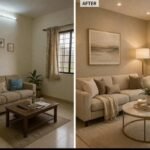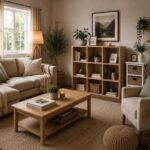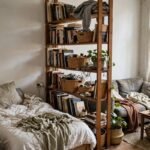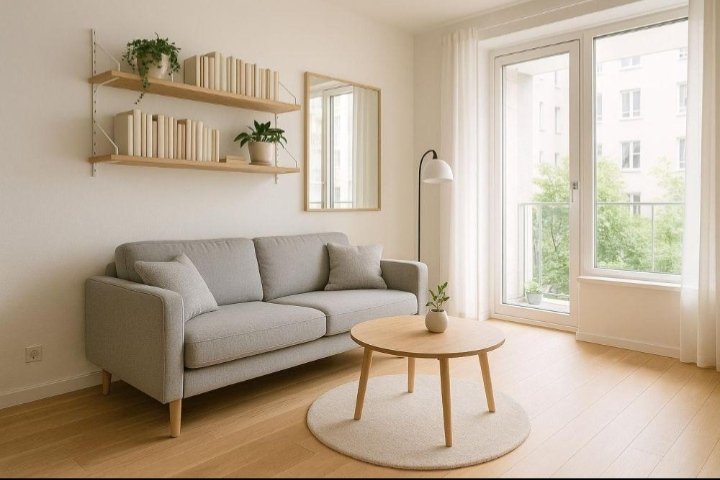
A small living room can feel crowded very quickly, especially when you have a sofa, a coffee table, and a few other pieces of furniture. I have noticed that sometimes the problem is not the size of the room but the way everything is arranged. Even a small change can make a living room feel more open and comfortable.
If you live in an apartment, a small house, or a rental, you do not need to buy all new furniture to make your living room look bigger. You can start by moving a few things around and making better use of the space you already have.
Here are 12 small living room layout ideas that can help you create more space without spending too much money.
1. Place the Sofa Against the Wall
One of the easiest ways to make a small living room feel bigger is to place the sofa against a wall. This leaves more open space in the middle of the room and makes it easier to walk around.
I would try this arrangement before buying any new furniture. If your sofa is currently sitting in the middle of the room without a clear purpose, moving it closer to the wall might make a noticeable difference.
2. Choose a Small Coffee Table
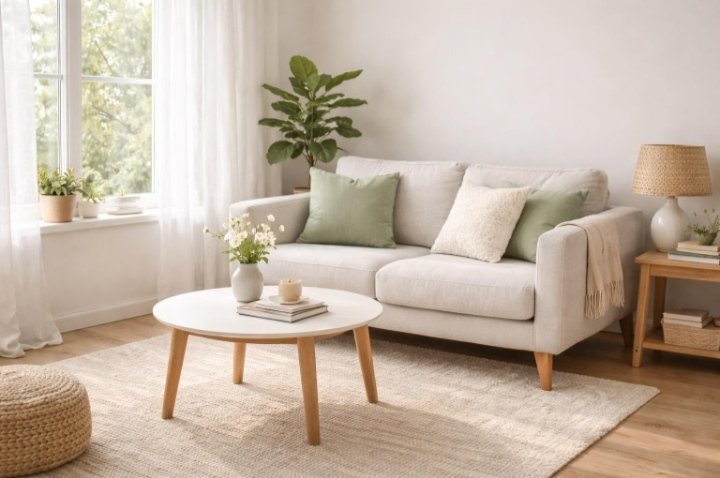
A large coffee table can take up more space than you realize. In a small living room, it can make walking around the sofa difficult.
I prefer a small, round coffee table because it takes up less visual space and has no sharp corners to bump into. You can also use a nesting table set. When you need more surface space, simply pull out the smaller tables. Otherwise, tuck them away.
3. Keep a Clear Walking Path
A living room feels cramped when you have to move around chairs, tables, and other furniture just to reach the sofa.
Try to create one clear walking path from the entrance to the main seating area. Move furniture away from doorways and avoid placing small decorative items where people need to walk.
You do not have to leave the entire floor empty. Just make sure people can move around comfortably without bumping into things.
4. Use Furniture That Fits the Room
Oversized furniture can make a small living room feel even smaller. A deep sofa or a bulky armchair may look beautiful in a large house but can overwhelm a compact apartment.
Before buying anything, measure your room and check the furniture dimensions. A compact sofa with slim arms can provide enough seating without taking up too much space.
I would rather have a few comfortable pieces that fit well than fill every corner with furniture.
5. Try a Corner Sofa
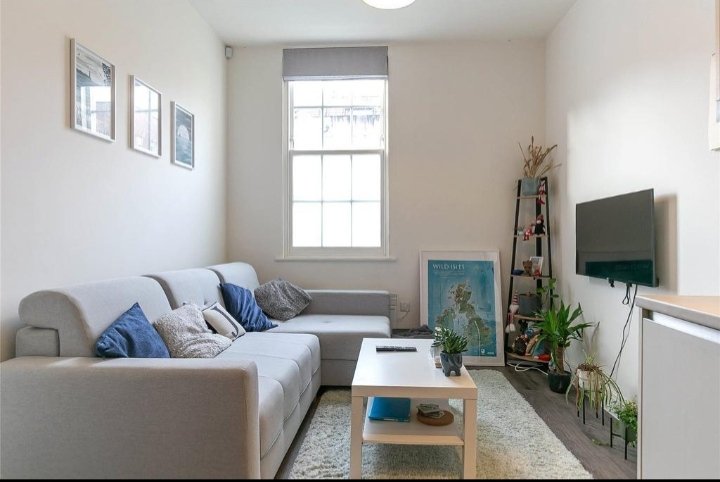
If you have a small rectangular living room, an L-shaped sofa may be worth considering. It can fit neatly into a corner and provide several seats without needing separate chairs.
Place the longer side against the main wall and keep the remaining floor area as open as possible. However, measure carefully before buying one because a large sectional can also overwhelm a small room.
For renters, a compact movable sofa may be a better choice than a bulky sectional.
6. Move Furniture Away From the Doorway
The entrance is often overlooked when arranging a living room. A chair, side table, or sofa placed too close to the doorway can make the whole room feel crowded as soon as you walk in.
Keep the entrance open and arrange the furniture so that the room feels welcoming from the moment you step inside.
If you have a narrow living room, placing the largest furniture pieces along the longer walls may help create a more balanced layout.
7. Use a Rug to Define the Seating Area
A rug can make a small living room look more organized without adding any furniture. It helps define the seating area and makes the room feel like one connected space.
Choose a rug that is large enough for the front legs of your sofa and chairs to rest on it. A rug that is too small can make the furniture arrangement look disconnected.
I would choose a simple pattern or a light neutral color if the room already has several colors and decorations.
8. Place Furniture Away From the Windows
Natural light can make a small living room feel brighter and more open. If a tall cabinet or bulky chair blocks your windows, the room may feel darker than it needs to.
Try placing shorter furniture near windows and moving taller pieces to another wall. Keep curtains simple and hang the curtain rod a little higher than the window frame if the room allows it.
You do not need a completely bare window. Just let as much natural light in as possible.
9. Use a Storage Ottoman Instead of Extra Furniture
A storage ottoman is useful when you want extra seating, a footrest, and a place to keep things out of sight.
You can use it instead of a separate footstool or a large side table. Store blankets, magazines, remote controls, or other small items inside.
I like this idea because it helps reduce clutter while still giving you something practical to use every day.
10. Make Use of Vertical Space
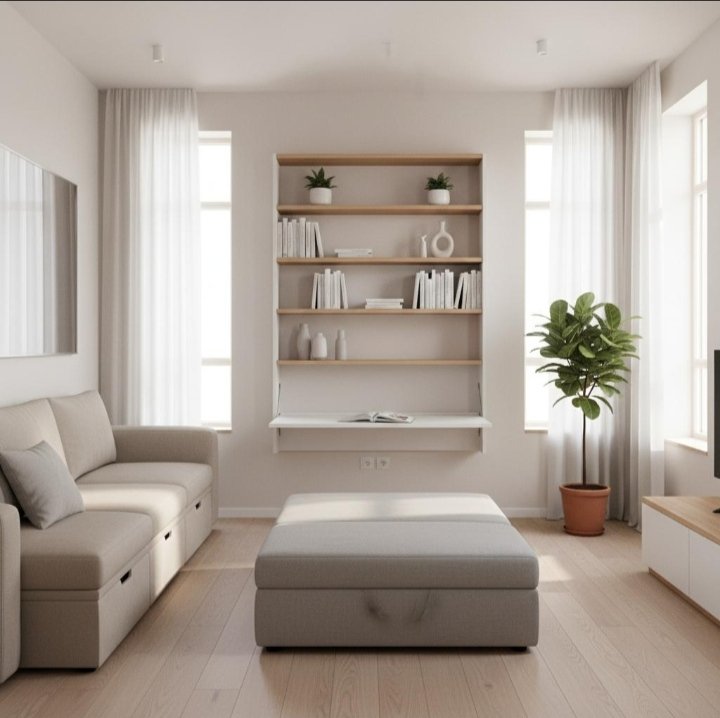
When floor space is limited, look at the walls. Floating shelves, wall-mounted lights, and a television mounted securely on the wall can help free up space that would otherwise be used by cabinets or floor lamps.
Keep shelves organized instead of filling them with too many decorative objects. A few books, a small plant, and one or two personal items are often enough.
If you rent, check your lease before drilling holes. Removable solutions may be more suitable for your home.
11. Arrange Seating Around One Focal Point
A small living room can feel confusing when the furniture faces different directions without a clear purpose.
Choose one focal point, such as a television, fireplace, or large window, and arrange the main seating around it. This creates a natural gathering area and helps the room feel more organized.
If you enjoy talking with family and friends, angle the chairs slightly toward the sofa rather than lining every seat up against the walls.
12. Leave Some Empty Space
It can be tempting to fill every corner with a plant, a small table, or a decorative basket. However, empty space is just as important as the furniture itself.
Try removing one or two pieces that you rarely use. Keep only the items that serve a purpose or make you happy.
I think this is one of the most affordable ways to improve a small living room. You do not have to buy anything; sometimes, moving things out is enough.
Final Thoughts
Making a small living room feel bigger does not always require expensive furniture or a complete makeover. Simple changes, such as moving the sofa against a wall, choosing a smaller coffee table, and keeping walkways clear, can make everyday life more comfortable.
I would start with the furniture you already own and experiment with a few different arrangements before spending any money. Once you have created more open floor space, you can add a rug, better storage, or a few decorations if needed.
Which of these small living room layout ideas would you try first in your home?